
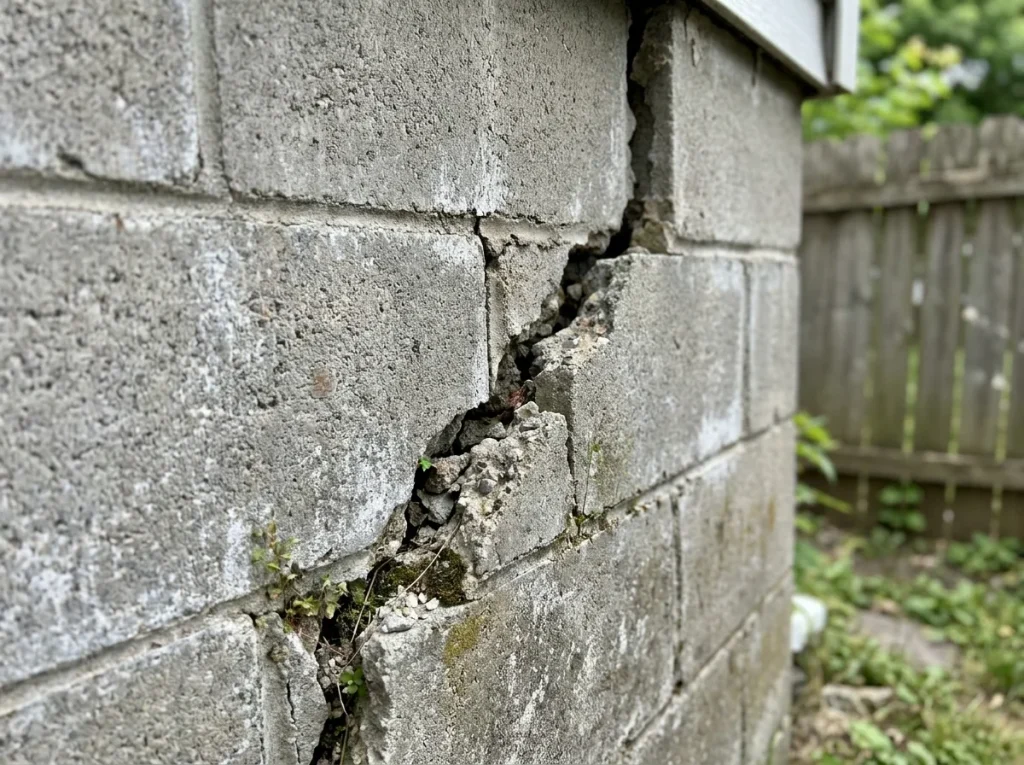
Not every crack in a Phoenix foundation means trouble, but the ones that do tend to share a signature: they run horizontal, they step diagonally through block joints, or they’ve widened past a quarter inch. Knowing which foundation cracks are serious starts with reading the direction and width before you read the fear into it. This guide breaks down what each crack type usually means, work we handle across the Phoenix area, so you know what you’re looking at before you ever pick up the phone.
Arizona’s expansive clay soils and long dry-to-monsoon swings put more stress on stem walls and slabs than most homeowners realize, which is exactly why crack direction matters so much here. A crack that would be cosmetic in a house built on stable soil can point to real lateral pressure in a Valley home. Here’s how to sort one from the other.
Crack direction is the first clue
Before you measure anything, look at the path the crack takes. Direction tells you what kind of force created it, and that’s a faster read than width alone.
Vertical cracks
Vertical or near-vertical cracks running straight up and down are the most common type found in Phoenix foundations, and they’re usually the least serious. They typically come from ordinary concrete shrinkage as the slab or stem wall cures, or from minor, even settling across the footprint of the house. A hairline vertical crack that hasn’t widened in months is rarely a structural signal on its own. For a deeper look at when a shrinkage crack is genuinely nothing to worry about versus when it’s worth a second look, see are hairline foundation cracks normal.
Diagonal cracks
Diagonal cracks, often running at roughly 30 to 75 degrees from the corner of a window or door opening, sit in the moderate-concern category. They usually point to differential settlement, meaning one part of the foundation is moving down or sideways at a different rate than the rest. A single short diagonal crack near an opening can still be minor, but multiple diagonal cracks radiating from the same corner, or ones that keep extending, suggest uneven support under the footing and warrant a closer diagnostic look.
Horizontal cracks (the serious one)
Horizontal cracks are the type foundation professionals take most seriously, and for good reason. A crack running side to side across a stem wall or basement-style wall almost always means lateral pressure is pushing against the wall from the outside, whether that’s expansive soil swelling against the foundation or hydrostatic pressure after heavy rain. If you see rust staining bleeding through the crack, that’s the embedded rebar corroding and expanding, which accelerates the damage from the inside out. Horizontal cracks are also the ones most likely to come with visible bowing or leaning in the wall itself. Any horizontal crack, especially one with rust staining or a wall that no longer reads flat with a straightedge, belongs in front of a professional promptly. This is the scenario our foundation crack repair page walks through in more diagnostic detail, including what the repair path typically looks like once the cause is confirmed.
Stair-step cracks in block
If your home has a block or masonry stem wall, watch for cracks that zigzag diagonally along the mortar joints instead of running through the block itself, the classic “stair-step” pattern. This is one of the clearest signs in Arizona construction that the wall is experiencing differential movement, usually from soil settlement or expansion pushing unevenly against the footing below. Stair-step cracks are common enough in Valley stem walls that they deserve their own explanation of what’s actually happening behind the wall; what causes stem wall cracks covers the soil mechanics in more depth. A stair-step crack wider than hairline, or one paired with a door or window that’s started sticking, is a strong candidate for a professional assessment rather than a wait-and-see approach. Our stem wall repair page details how these are typically addressed once the movement is confirmed.
How wide is too wide? (the 1/8″–1/4″ rule)
Direction tells you the likely cause; width tells you the urgency. As a general rule used across the foundation repair industry:
- Hairline to 1/8 inch: Common in normal curing and minor shrinkage. Worth noting and monitoring, but not typically a structural red flag on its own, especially if vertical.
- 1/8 to 1/4 inch: This is the threshold where a crack starts to warrant a closer look, particularly if it’s horizontal, diagonal with other symptoms, or growing over time. A crack in this range isn’t automatically an emergency, but it’s no longer something to ignore.
- 1/4 inch and wider: Generally considered serious regardless of direction, and cracks that reach 2 inches or more usually indicate significant structural movement that needs immediate professional evaluation.
Width alone doesn’t tell the whole story, though. A hairline horizontal crack with rust staining can be more urgent than a quarter-inch vertical crack that’s been stable for years. That’s why direction and width should always be read together, not in isolation.
A crack’s direction tells you what caused it. Its width, and whether that width is changing, tells you how urgent it is to act.
Active vs. dormant — how to tell if it’s moving
One of the most useful things you can do before calling anyone is figure out whether a crack is still active or if it’s dormant, meaning the movement that caused it has stopped. A dormant crack from old settlement can often be monitored; an active crack that’s actively widening usually can’t wait.
A few low-cost ways to track movement over time:
Get Your Foundation Looked At
A quick inspection tells you what is really going on beneath the surface — and we will send a written estimate.
→ Request a Written Estimate- Pencil marks and a dated ruler: Mark each end of the crack with the date and re-measure every few weeks. Any change in length or width is your answer.
- Painter’s tape or a crack monitor: A strip of tape across the crack will tear if the crack widens or shifts. Purpose-built crack monitors (small plastic gauges installed across the crack) give a more precise reading and are what professionals typically use during a longer assessment period.
- Photos with a reference object: A coin or ruler laid next to the crack in each photo makes width changes easy to compare month to month.
If the crack hasn’t moved in several months of monitoring, that’s useful information, but it doesn’t mean the underlying cause has resolved itself. If it has moved, especially if a door or window nearby has started sticking, floors have sloped, or the crack has grown wider or longer, that’s an active condition and the kind of thing best confirmed with a foundation inspection rather than continued monitoring alone.
What each type usually means for repair
Once you know the direction, width, and activity status of a crack, the likely repair path becomes a lot clearer:
- Hairline vertical, dormant: Often just monitored or sealed to keep moisture out. Rarely needs structural intervention on its own.
- Diagonal, moderate width, dormant: Typically repaired with an epoxy or polyurethane injection to restore the crack and stop moisture intrusion, after confirming the settlement has stabilized.
- Horizontal, any width, especially with rust staining: This is where reinforcement usually comes into the conversation, since the wall needs support against ongoing lateral pressure, not just a sealed crack. Depending on severity, that can mean carbon fiber or GFRP reinforcement to stabilize the wall.
- Stair-step in block, active: Usually points to a stem wall issue that needs addressing at the source of the movement, not just the visible crack.
- Wide (1/4″+) or actively growing, any direction: Warrants a full assessment before any cosmetic fix, since sealing an actively moving crack without addressing the cause typically fails again within a season or two.
This is honestly the most useful way to think about crack severity: not “is this scary” but “what is this crack telling me about what’s happening behind the wall.” A clear diagnosis is what makes the eventual repair, if one’s needed, straightforward instead of guesswork.
Frequently Asked Questions
Which foundation cracks are serious?
Horizontal cracks are the most serious, since they usually signal lateral soil or hydrostatic pressure pushing against a stem or foundation wall. Stair-step cracks in block walls, cracks wider than about 1/4 inch, and any crack that’s actively growing or paired with rust staining, bowing, or sticking doors and windows also fall into the serious category and are worth a professional look.
Are horizontal cracks worse than vertical?
Generally, yes. Vertical cracks are most often the result of ordinary shrinkage or even settling and are frequently minor. Horizontal cracks indicate the wall is under lateral pressure from outside, which is a different and typically more urgent mechanism that can progress into bowing if it isn’t addressed.
What does a stair-step crack mean?
A stair-step crack, one that zigzags along the mortar joints of a block or masonry stem wall, indicates differential movement in the foundation, usually from soil settlement or expansive soil pushing unevenly against the footing. It’s a pattern specific to block construction and is common enough in Arizona stem walls to warrant its own diagnostic look.
How wide does a crack have to be to worry?
As a general guideline, cracks under 1/8 inch are usually minor, cracks between 1/8 and 1/4 inch deserve closer attention, and cracks at 1/4 inch or wider are generally considered serious regardless of direction. Cracks that reach 2 inches or more typically indicate significant structural movement.
How do you tell if a crack is still moving?
Mark and date the ends of the crack, use a strip of painter’s tape or a crack monitor across it, or take dated photos with a coin or ruler for scale, then recheck every few weeks. If the crack lengthens, widens, or a nearby door or window starts sticking, the crack is active. If nothing changes over several months, it’s likely dormant, though the underlying cause may still be worth confirming.
If you’ve measured, watched, and you’re still not sure which category your crack falls into, that uncertainty is exactly what a professional assessment is for. You can book an inspection or browse the blog for more guides like this one before deciding what your crack needs.