
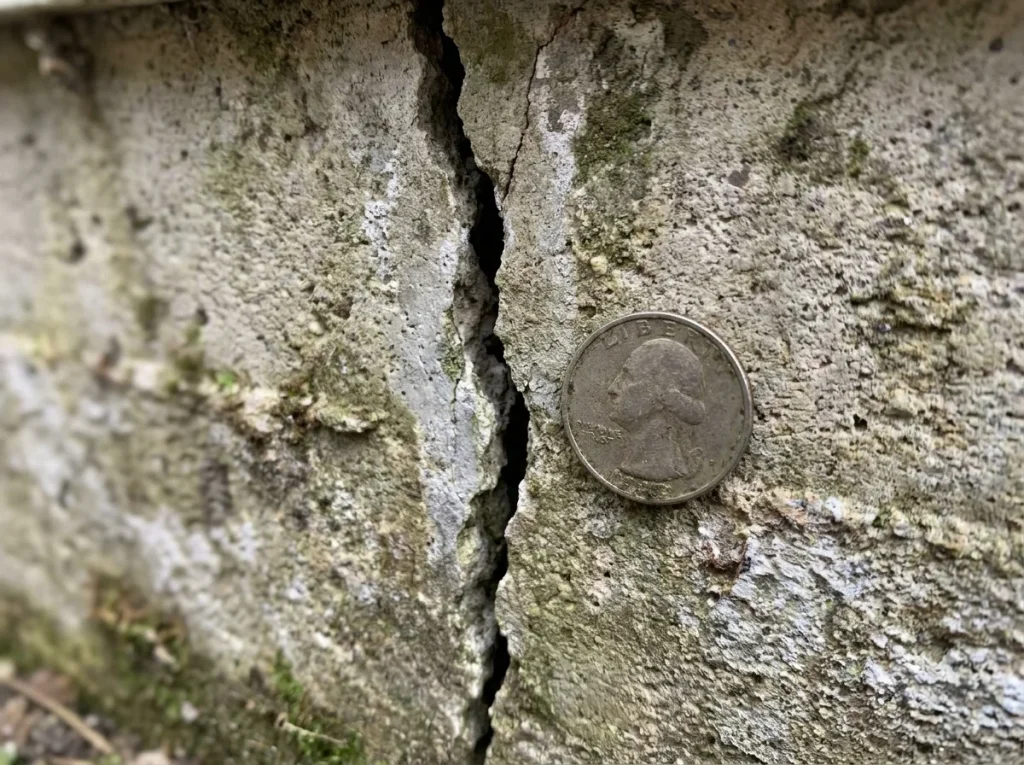
Not every crack in a Phoenix foundation is a five-alarm problem — but some genuinely are, and knowing when to worry about a foundation crack comes down to a handful of specific, checkable details rather than a gut feeling. Width, direction, and whether the crack is still moving tell you far more than its length or how dramatic it looks on the wall. This guide walks through exactly what separates a harmless curing crack from one that’s telling you something structural is happening underneath your Arizona home.
Cracks that are usually fine
Most foundation cracks a Phoenix homeowner finds during a walk around the house are cosmetic. Concrete is a rigid material sitting on a soil that expands and contracts with our wet-dry cycles, so some cracking is simply part of how the material settles into itself. The trick is learning to recognize the two patterns that almost never mean trouble.
Hairline shrinkage cracks
As poured concrete cures, it loses moisture and shrinks slightly — usually within the first one to two years after the slab or footing is placed. That shrinkage often produces thin, hairline cracks that run vertically or in a light map pattern across a wall or slab. They’re typically thinner than a credit card’s edge, don’t have any noticeable gap or offset between the two sides, and stay the same width year after year. These are considered normal and rarely require repair beyond a cosmetic seal.
Thin vertical cracks with no gap
A single vertical crack under about 1/16″ to 1/8″ in width, with both edges sitting flush against each other, is usually another sign of ordinary settling rather than a structural issue. What matters is that the two sides of the crack stay level with each other — run a fingernail across it and you shouldn’t feel a lip or step where one side has dropped relative to the other. If it’s been there a while and hasn’t widened, it’s very likely stable.
Cracks that warrant a look
The cracks worth pausing on share a few traits: they’re wider than the shrinkage-crack range, they run in a direction that signals pressure rather than curing, or they’re actively changing. Any one of these on its own is worth a closer look.
Wider than 1/8″–1/4″
Once a crack opens beyond roughly 1/8″ to 1/4″ in width, it’s crossed the general threshold most foundation professionals use to separate cosmetic from potentially structural. That range isn’t a hard rule — a wide but stable, unchanging crack in an older home can still be low-priority — but it’s the point where a crack has earned a real inspection rather than a glance. If you can slide a dime or a nickel’s edge into the gap, it’s time to have someone look at it. Our foundation crack repair page walks through how repairs are triaged once a crack passes this point.
Horizontal and stair-step cracks
Direction matters as much as width. A horizontal crack running across a poured foundation wall is one of the more serious patterns you’ll see, because it usually points to soil or hydrostatic pressure pushing against the wall from the outside — a common story after Arizona’s summer monsoon soaks expansive clay soils that had been bone-dry all season. Stair-step cracks that zigzag along the mortar joints of a block stem wall are the equivalent warning sign for masonry construction, which is common under older Phoenix-area homes, and usually point to differential settlement on one side of the foundation. If you’re seeing either pattern, especially with any rust staining bleeding out of the crack, it’s worth having a stem wall repair specialist take a look rather than assuming it’s routine settling.
Cracks that are growing or letting water in
A crack that was 1/16″ last spring and is now 3/16″ isn’t behaving like a shrinkage crack anymore — it’s telling you something is still moving. The same goes for a crack that starts letting water, dust, or even light through it. Active movement or new water intrusion changes the answer from “watch it” to “get it looked at,” regardless of how the crack started.
“Most of the foundation cracks we inspect around Phoenix are harmless. The ones that actually need us are almost always horizontal, still growing, or showing up alongside a door that suddenly won’t close.”
The other signs that change the answer
A crack rarely shows up completely alone when there’s a real structural cause behind it. If you’re weighing whether to worry, look at the rest of the house too — the surrounding signs often tell you more than the crack itself.
- Doors or windows that have started sticking, dragging, or no longer latch the way they used to
- Floors that visibly slope, or that feel bouncy or uneven when you walk across a room
- A stem wall or foundation wall that’s bowing or leaning inward, rather than just cracked
- Gaps opening up between interior trim, baseboards, or the wall and ceiling
- Exterior stucco cracking in a pattern that lines up with a crack visible on the foundation below it
Any of these appearing together with a crack — even a modest one — is a stronger signal than the crack alone. Sloping or uneven floors in particular are worth mentioning to whoever inspects your foundation, since they often trace back to settlement that a concrete leveling or uneven floor repair plan can address alongside the crack itself.
Get Your Foundation Looked At
A quick inspection tells you what is really going on beneath the surface — and we will send a written estimate.
→ Request a Written EstimateHow to monitor a crack (and when monitoring isn’t enough)
If a crack falls into the “usually fine” category, it’s still worth keeping an eye on it for a few weeks rather than forgetting about it entirely. Mark both ends of the crack with a pencil and today’s date, and measure the width at its widest point with a small ruler or by noting which household item’s edge just fits inside it. Photograph it under consistent lighting every couple of weeks. If it hasn’t changed after a month or two, that stability is a good sign.
Monitoring stops being the right move the moment a crack is horizontal, stair-stepped, wider than about 1/4″, actively growing, or paired with any of the whole-house signs above. At that point, tracking it yourself is just delaying information you can get from a professional in under an hour. It’s also worth reading through which foundation cracks are actually serious for a deeper breakdown of the patterns that separate the two categories.
A proper foundation inspection gives you a written, documented answer instead of a guess — measurements, photos, and a straightforward explanation of whether what you’re looking at is cosmetic or structural, plus what it would take to fix it if it’s the latter. That’s the same triage process behind the repairs on our foundation crack repair page.
Frequently Asked Questions
When should you worry about a foundation crack?
Worry when a crack is wider than about 1/8″ to 1/4″, runs horizontally or in a stair-step pattern along masonry joints, is visibly growing over a few weeks, or is letting in water. A thin, stable, vertical crack that hasn’t changed in months is usually not a cause for concern.
Are cracks in the foundation serious?
Not automatically. The majority of foundation cracks, especially hairline cracks that appear in a home’s first couple of years, are the result of normal concrete curing and shrinkage. A crack becomes a serious concern when its width, direction, or behavior over time points to ongoing movement rather than a one-time settling event.
Can you live in a house with a cracked foundation?
In most cases, yes — a home with a stable, cosmetic crack is perfectly livable, and many Phoenix homes have a few of them without any structural concern. What changes that answer is a crack that’s actively growing, paired with bowing walls or sticking doors, or leaking water, since those signs suggest the foundation is still moving and the issue could worsen without repair.
How much foundation cracking is acceptable?
A narrow vertical crack under roughly 1/8″ that has stayed the same size, with no offset between its two sides, is generally considered within the range of normal settling. Once a crack opens wider than that, shows a visible step or lip, or runs horizontally, it’s no longer in the “acceptable and stable” category and deserves an inspection.
How do you know if a crack is structural?
The clearest indicators are direction and behavior: horizontal cracks and stair-step cracks in block stem walls are far more likely to be structural than thin vertical ones, and any crack that keeps growing, lets in water, or shows up alongside sticking doors or sloping floors should be treated as a possible structural sign until an inspection says otherwise. Measuring width and tracking change over a few weeks is the fastest way to tell.