
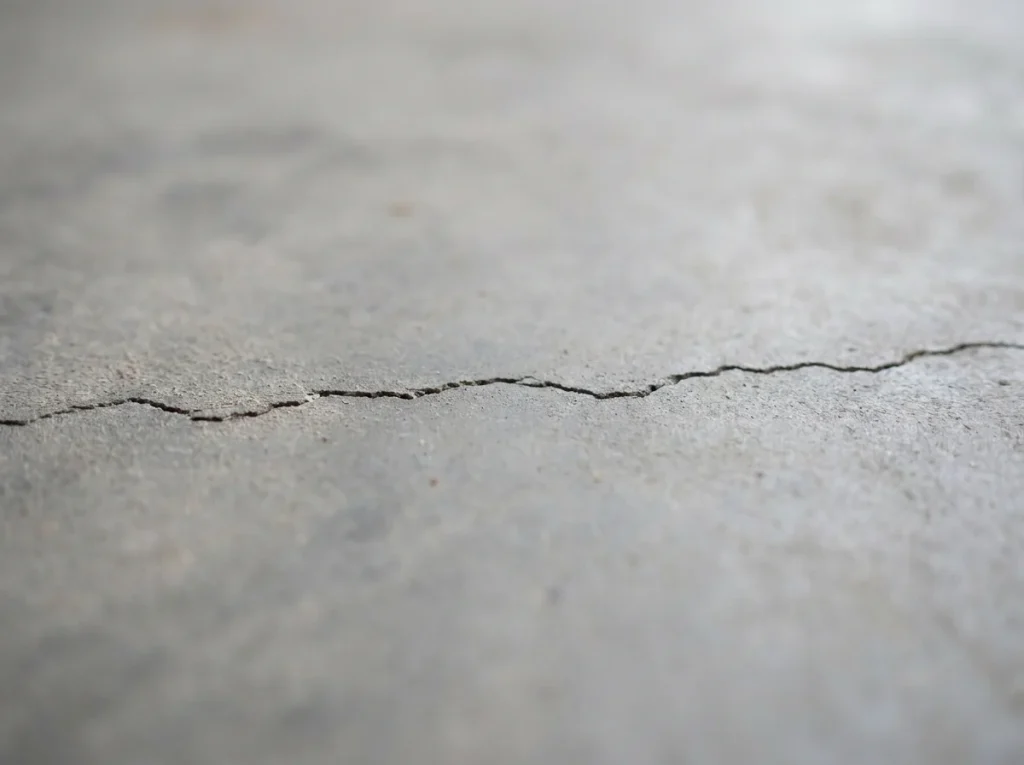
If you just spotted a thin line running across your slab or stem wall, the short answer is: yes, in Phoenix and across Arizona, hairline foundation cracks are usually normal — most are shrinkage cracks from the concrete curing, not a sign your foundation is failing. The honest answer we give homeowners more often than not is “leave it, just watch it.” But “usually normal” isn’t “always normal,” and knowing the difference is what keeps a $200 non-issue from turning into a $15,000 surprise.
Why most hairline cracks are normal (curing and shrinkage)
Concrete doesn’t stop moving the day it’s poured. As a slab or stem wall cures, water in the mix evaporates and the concrete contracts — that’s shrinkage, and it’s a chemical reality of the material, not a construction defect. In Arizona’s low humidity and high heat, that moisture leaves the concrete even faster than it would in a milder climate, which is one reason hairline cracking shows up so commonly here in the first place.
A true hairline crack is generally accepted as anything under about 1/16 of an inch wide — roughly the thickness of a coin’s edge. You’ll typically see these:
- Within the first one to two years after a home is built, as the concrete finishes curing and settles into its permanent shape
- Running in a fairly straight, vertical line, often near a control joint, corner, or window opening
- The same width from top to bottom, with no gap you can fit a fingernail into
- Dry, with no staining, rust, or efflorescence (the white chalky mineral residue that follows water)
Shrinkage cracks are cosmetic. They don’t affect the structural capacity of the slab or wall, and in most cases they never need a structural repair — just a little maintenance, which we cover below.
When a “hairline” crack isn’t harmless
Here’s where we’d rather tell you it’s nothing and save you the money than talk you into a repair you don’t need — but that only works if you also know the signs that flip a cosmetic crack into a structural one. A crack stops being “just hairline” when any of the following show up:
- It’s growing. A crack that was a hairline six months ago and is now visibly wider, longer, or easier to catch a fingernail on is telling you something is still moving.
- It’s horizontal or stair-step shaped. Vertical hairline cracks are typically shrinkage. Horizontal cracks in a stem wall, or diagonal “stair-step” cracks that follow mortar joints in block, usually point to pressure or movement, not curing.
- Water is involved. Moisture seeping through the crack, staining around it, or efflorescence buildup means water has a path into the concrete — and in Arizona’s expansive clay soils, water is usually the root cause of real foundation movement.
- The width crosses into the serious range. Cracks that open beyond roughly 1/8 to 1/4 inch, especially if they’re uneven (wider at one end than the other), warrant a professional look rather than a tube of caulk.
If you’re seeing any of that, it’s worth reading through which foundation cracks are actually serious or getting a second opinion through foundation crack repair before you decide it’s nothing.
We’d rather walk a homeowner through why a crack is cosmetic and save them the money than sell a repair they don’t need — that’s the only way trust holds up in this business.
Should you seal them?
Even a confirmed cosmetic hairline crack is worth sealing — not because it’s structurally at risk, but because an open crack is a door for water and, over time, for the salts and moisture cycling that can eventually widen it. Sealing:
- Keeps water, soil moisture, and irrigation runoff from tracking into the crack and freeze-thaw or wet-dry cycling it wider over the years
- Prevents small pests and debris from finding a path through the slab edge or stem wall
- Keeps the crack easy to monitor, since a clean sealed line makes new movement obvious against the old one
A hairline crack in a slab or stem wall is generally an easy, low-cost seal. If a crack has already grown past hairline or shows any of the warning signs above, sealing isn’t the fix on its own — that’s when it graduates to an actual foundation crack repair, which addresses the cause, not just the surface.
New home vs. older home — what’s expected
Context matters almost as much as the crack itself. Are cracks in a new home foundation normal? Yes — in the first one to two years, a hairline crack or two from curing shrinkage is common enough that it’s practically expected, especially in a Phoenix-area home poured during summer heat. Builders and inspectors see this regularly and it rarely signals a problem with the foundation itself.
In an older home, the calculus shifts. A brand-new hairline crack appearing in a 15- or 20-year-old foundation isn’t shrinkage anymore — the concrete finished curing decades ago. A new crack at that stage is more likely tied to soil movement, a plumbing leak under the slab, drainage changes around the home, or normal settlement finally catching up to a weak point. That doesn’t mean panic — it means the crack deserves an actual look rather than an assumption, particularly if you’re buying or selling and want it documented; a home inspection foundation check can settle that quickly.
Get Your Foundation Looked At
A quick inspection tells you what is really going on beneath the surface — and we will send a written estimate.
→ Request a Written EstimateHow to keep an eye on one
If you’ve decided a hairline crack is cosmetic, don’t just forget about it — monitor it for a few weeks to a season before you file it away for good:
- Mark the ends. Use a pencil or piece of tape to note exactly where the crack currently starts and stops.
- Date it. Write the date next to the mark, or snap a photo with a ruler or coin next to the crack for scale.
- Recheck monthly. Look for the crack extending past your marks, widening, or changing character (going from dry to damp, straight to stair-step).
- Watch for companions. A hairline crack that starts showing up alongside sticking doors, gaps around window trim, or new tile cracks is a different story than one appearing alone.
If any of those show up, that’s your signal to move from monitoring to professional foundation inspection rather than more waiting. We’ve looked at enough Valley foundations to tell a curing crack from a movement crack in a few minutes on site.
Frequently Asked Questions
Are hairline foundation cracks normal?
Yes, in most cases. A crack under about 1/16 of an inch that’s straight, vertical, dry, and appears within the first couple of years of a home’s life is typically shrinkage from the concrete curing — a cosmetic issue, not a structural one.
Do hairline cracks mean foundation problems?
Usually not. Most hairline cracks are unrelated to foundation movement or settlement. They only point to a real problem when they’re growing, horizontal or stair-step in shape, leaking or staining, or wider than roughly 1/8 to 1/4 inch.
Should I seal a hairline crack?
Yes, once you’ve confirmed it’s cosmetic. Sealing a hairline crack keeps water and debris out and makes it much easier to spot future movement against a clean, sealed line.
Are cracks in a new home foundation normal?
Yes. New construction commonly shows one or more hairline shrinkage cracks in the first one to two years as the concrete finishes curing, and this is considered a normal, expected part of the process rather than a defect.
When does a hairline crack become serious?
When it starts growing over time, runs horizontally or in a stair-step pattern, shows water staining or efflorescence, or widens past roughly 1/8 to 1/4 inch. Any of those is a reason to get it looked at rather than continue monitoring.
Still not sure whether what you’re looking at is cosmetic or something that needs attention? A written estimate can settle it either way — you can book an inspection or read more on foundation crack repair and when to worry about a foundation crack before you decide.