
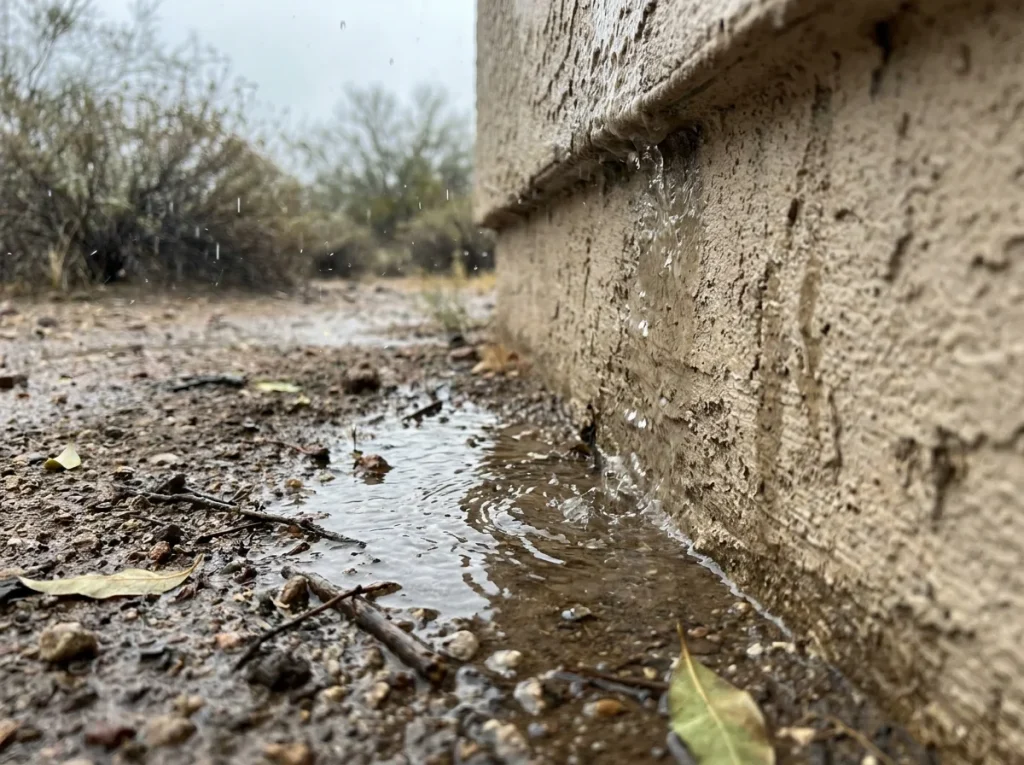
Monsoon foundation damage follows a pattern almost every Phoenix homeowner can set a calendar by: the house sits fine for months, then a single July or August storm rolls through and a new crack shows up in the drywall or along the slab within days. It isn’t bad luck. Arizona’s expansive clay soil spends the pre-monsoon months bone-dry and shrunken, then absorbs a summer’s worth of rain in a few violent downpours, and that whiplash is what moves foundations. If you’ve noticed fresh cracking after a storm, Phoenix Foundation Repair Co. can tell you whether it’s normal seasonal movement or something that needs attention now.
The monsoon whiplash (dry soil meets sudden rain)
By June, soil under a typical Phoenix slab has gone months without meaningful moisture. It contracts, pulls away from the edges of the foundation, and leaves gaps where there used to be firm, supportive contact. Then monsoon season arrives, and instead of a slow, soaking rain, Arizona gets short, intense bursts that can drop an inch or more in under an hour. That water doesn’t have time to soak in gradually — it either pools against the foundation or races into the ground right where the soil is most reactive. The soil goes from shrunken to swollen in a matter of days, and the foundation above it has to absorb that movement. This rapid dry-to-wet cycle, repeated every summer, is the single biggest reason Phoenix homes develop new foundation cracks in late summer rather than any other time of year.
How expansive clay reacts to a downpour
Not all Arizona soil behaves the same way, but a large share of the Valley sits on expansive clay, and that soil type is uniquely bad news for a slab foundation. Clay particles absorb water and swell dramatically — enough to lift sections of a slab unevenly, since the soil rarely swells at the same rate everywhere under the house. Areas near downspouts, low points in the yard, or spots that catch runoff swell first and hardest, while drier zones lag behind. That uneven swelling is what actually cracks concrete and drywall, not the water itself. The same clay that swells with monsoon rain will shrink back down as it dries out again in the fall, which is why some hairline cracks seem to “heal” partially, only to reopen the following summer if the underlying cycle isn’t addressed.
The crack didn’t appear because of one storm — it appeared because the soil beneath the foundation swelled unevenly, and the slab had nowhere to go but along its weakest point.
Drainage mistakes that make it worse
Drainage is the variable homeowners have the most control over, and it’s also where the most damage gets done unintentionally. A few common mistakes show up again and again on Phoenix properties:
- Downspouts that dump water directly against the foundation instead of routing it several feet away
- Yards graded flat or sloped toward the house instead of away from it
- Clogged gutters that overflow along one section of roofline, concentrating water in a single spot
- Sprinkler or drip irrigation heads positioned too close to the foundation, adding daily moisture on top of monsoon rain
- Hardscaping or mulch beds that trap water instead of letting it drain
Any one of these concentrates water exactly where the soil is most likely to swell unevenly, turning a normal monsoon storm into a localized soil-movement problem. Combine two or three of them — a downspout aimed at a bed with a sprinkler head nearby, on a yard that slopes slightly toward the house — and you’ve built a reliable crack-generator that fires every summer.
Why you notice new cracks in late summer
The timing isn’t a coincidence. Most of the year, Phoenix soil moisture is stable and low, so foundations sit relatively still. Late July through September is when the dry-to-wet swing is largest and fastest, which is exactly when soil movement — and the cracking it causes — shows up. Homeowners often assume a crack is brand new because that’s the first time they’ve seen it, but many of these cracks are the visible result of a stress point that’s been building for several monsoon seasons, finally showing itself once the soil movement was severe enough. A crack that widens noticeably, runs diagonally from a corner, or is wider than a credit card is worth a closer look with a proper foundation inspection rather than assuming it will settle back down on its own.
Simple drainage fixes that protect your foundation
The good news is that the cheapest foundation protection available doesn’t involve concrete work at all — it’s managing where water goes. Before the next monsoon season builds, most Phoenix homeowners can knock out these fixes in a weekend:
Get Your Foundation Looked At
A quick inspection tells you what is really going on beneath the surface — and we will send a written estimate.
→ Request a Written Estimate- Extend downspouts so they discharge at least 4–6 feet from the foundation, not right at the base
- Re-grade any low spots so soil slopes away from the house at a gentle, consistent pitch
- Clean gutters before monsoon season starts so water doesn’t overflow unpredictably
- Move sprinkler heads and drip lines away from the foundation edge, and check for leaks that create a constant wet spot
- Add splash blocks or extenders under downspouts on concrete patios where regrading isn’t practical
These changes reduce how unevenly the soil around your slab swells and shrinks each year, which is the actual mechanism behind most monsoon-related cracking. For homes with existing settlement or a slab that’s already moved, drainage fixes alone won’t undo the damage — that’s where a targeted repair like foundation crack repair or, for larger settlement issues, concrete leveling comes in. If you’re not sure how your soil type behaves, our post on why Phoenix soil wrecks foundations goes deeper into the science behind expansive clay across the Valley.
Frequently Asked Questions
Can heavy rain cause foundation cracks?
Yes. Heavy rain itself isn’t the direct cause — it’s what the rain does to expansive clay soil underneath the foundation. Rapid, uneven swelling after a downpour puts stress on the slab and surrounding structure, and that stress is what actually produces the crack.
Why do foundation cracks appear after monsoon?
Because monsoon storms deliver a large volume of water very quickly to soil that was dry and contracted just days earlier. That sudden swing from shrunken to swollen soil creates the uneven movement that cracks concrete, drywall, and stucco, which is why so many Phoenix homeowners see new cracks specifically in July, August, and September.
Does drainage affect foundation problems?
Significantly. Poor drainage concentrates water in specific spots around a foundation, which causes that section of soil to swell more than the rest of the yard. Good drainage — downspouts routed away from the house, proper grading, and controlled irrigation — spreads moisture more evenly and reduces the differential movement that leads to cracking.
How do I protect my foundation during monsoon season?
Start with the basics: extend downspouts away from the foundation, make sure the yard grades away from the house, clean gutters before storms hit, and keep sprinklers from soaking the soil right at the slab edge. These low-cost steps address the root cause of most seasonal foundation stress in Arizona.
Should I worry about cracks that appear after rain?
A thin hairline crack that doesn’t grow is usually normal seasonal movement. A crack that’s wider than a quarter-inch, runs diagonally, keeps growing, or shows up alongside sticking doors or uneven floors is worth a professional look. When you’re not sure which category a crack falls into, reach out to Phoenix Foundation Repair Co. and get a written estimate before deciding whether it’s cosmetic or structural — for more background on what to watch for, see when you should worry about a foundation crack.