
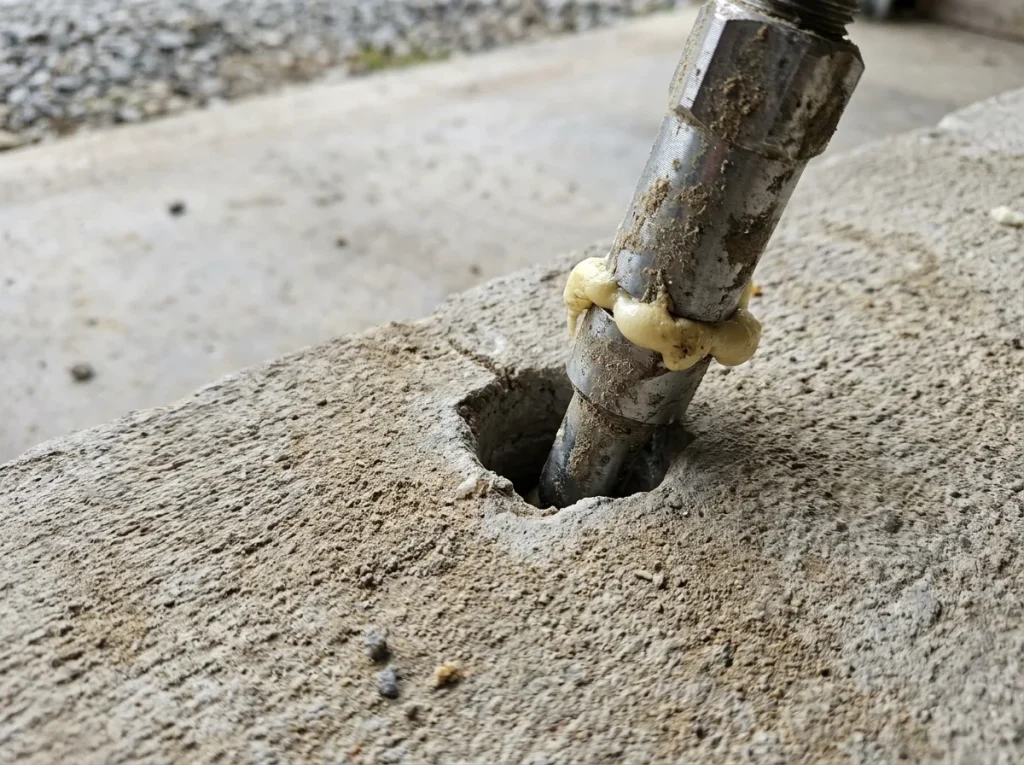
Concrete leveling cost in the Phoenix area typically runs $500 to $3,000 per project, with per-square-foot pricing landing between $3 and $6 for mudjacking and $5 to $25 for polyurethane foam. Which number applies to your driveway, patio, or garage slab depends on how far it has sunk, how big the void underneath is, and which method actually fixes it — not just which one quotes the lowest price per foot. Every concrete leveling job for Phoenix Foundation Repair Co. reflects what our crews actually see on Arizona slabs, not a national average pulled from a different climate and a different soil type.
Typical price ranges by method
Concrete leveling is priced two ways: by the square foot of slab being raised, and by the total job once access, material volume, and travel are factored in. Here’s what each method runs in the Phoenix market:
- Mudjacking (mud/slurry pumping): roughly $3–$6 per square foot. A cement-and-soil slurry is pumped through small drilled holes to fill the void and lift the slab.
- Polyurethane foam injection: roughly $5–$25 per square foot. A high-density structural foam expands beneath the slab through dime-sized injection points, lifting it with far less added weight.
- Typical total project: $500–$3,000 for most residential jobs — a single sunken slab section on the low end, a driveway or multi-slab patio on the high end.
Those ranges are a starting point, not a quote. A crew has to see the slab, probe for the void depth, and confirm what’s causing the settlement before any number gets written down. Phoenix’s expansive clay soil complicates that estimate further — the same soil that shrinks during a dry summer and swells after monsoon rain is what pushed the slab out of level in the first place, so a technician also has to judge whether the ground underneath has stabilized or is still moving before recommending a method.
What drives the price
Two jobs that look similar from the street can price out very differently once a technician gets underneath the surface story.
Slab size and void depth
A larger slab needs more material, full stop — but square footage alone doesn’t set the price. A shallow gap that’s settled half an inch costs far less to fill than a deep void from years of soil erosion or a broken irrigation line washing material out from under the slab. Depth and volume, not just surface area, determine how much mud or foam a job actually consumes.
Method and access
Foam rigs are compact and can reach tight side yards, interior rooms, or slabs boxed in by landscaping where a mudjacking pump truck can’t get close. That access flexibility is part of why foam carries a higher per-square-foot price — the equipment, the material chemistry, and the precision it takes to lift a slab evenly all cost more than pumping a cement slurry through a hose.
Cost by project (driveway, patio, garage, interior)
Where the slab sits changes both the method that makes sense and the final bill. A leveling job priced purely on square footage without accounting for the slab’s location, what’s built around it, and how the equipment will reach it tends to miss the mark once the crew actually shows up:
- Driveways: large, open, easy truck access — often the most economical per square foot, but the total can climb given the sheer area involved.
- Patios: pavers, planters, and outdoor furniture around the edges can add labor time even on a modest-sized slab.
- Garage slabs: frequently affected by Phoenix’s expansive clay soil pushing and pulling under the perimeter; foam’s precision often makes sense here to avoid overshooting the lift.
- Interior slabs: the smallest footprint but the highest stakes — flooring, plumbing penetrations, and finished walls nearby usually point toward foam for its minimal mess and fast set time.
Why cheaper-per-foot isn’t always cheaper
Mudjacking’s lower price per square foot is real, but the slurry mix is heavier and more porous than foam, which means it’s more exposed to Arizona’s wet-dry soil cycles working against it over time. Foam is lightweight, doesn’t absorb groundwater the way a cement slurry can, and cures in about fifteen minutes instead of days. That’s the trade-off worth pricing out before choosing the cheaper sticker.
The real cost of concrete leveling isn’t the per-foot number — it’s how many times you end up paying it.
Not Sure How Bad It Is?Get Your Foundation Looked At
A quick inspection tells you what is really going on beneath the surface — and we will send a written estimate.
→ Request a Written Estimate
For a side-by-side breakdown of how the two methods perform, see our comparison of mudjacking vs. polyurethane foam. And if you’re weighing how long a leveling job should realistically hold up, we cover that in how long concrete leveling lasts.
Concrete leveling is also worth weighing against the cost of doing nothing — a slab that keeps sinking can point to a bigger issue underneath it. If you’re seeing settlement alongside cracked walls or a sticking door, our guide to foundation repair cost walks through what that broader picture looks like.
Frequently Asked Questions
How much does concrete leveling cost?
Most Phoenix-area concrete leveling jobs run $500 to $3,000 total, or roughly $3–$25 per square foot depending on method. Mudjacking sits at the lower end of that per-foot range; polyurethane foam sits higher but often lifts a smaller slab section for a comparable total price.
How much does mudjacking cost per square foot?
Mudjacking typically runs $3 to $6 per square foot in the Phoenix area. It’s usually the more affordable option for large, open slabs like driveways where heavy truck access isn’t a problem.
Why does foam leveling cost more?
Polyurethane foam costs $5 to $25 per square foot because of the material itself, the specialized injection equipment, and the precision the process demands. In exchange, it adds far less weight to the soil below, sets in minutes rather than days, and reaches tight spots a mudjacking pump truck can’t.
Is concrete leveling cheaper than replacement?
Yes — leveling an existing slab is almost always cheaper than tearing it out and pouring a new one, since it skips demolition, disposal, forming, and full-depth concrete costs entirely. It only makes sense, though, when the slab itself is still structurally sound and the settlement is coming from the soil underneath, not a crumbling or badly cracked slab that needs to be replaced outright. Our concrete leveling vs. replacement guide walks through how to tell the difference before committing to either path.
What affects the price of slab leveling?
Four things move the number most: the slab’s total square footage, how deep the void underneath runs, which method fits the access and the finish work around the slab, and how far the crew has to travel. That’s why pricing over the phone rarely holds up — a technician needs to see the slab and check the void before a number means anything. If you’re ready for that step, book an inspection and get a written estimate before any work starts.