
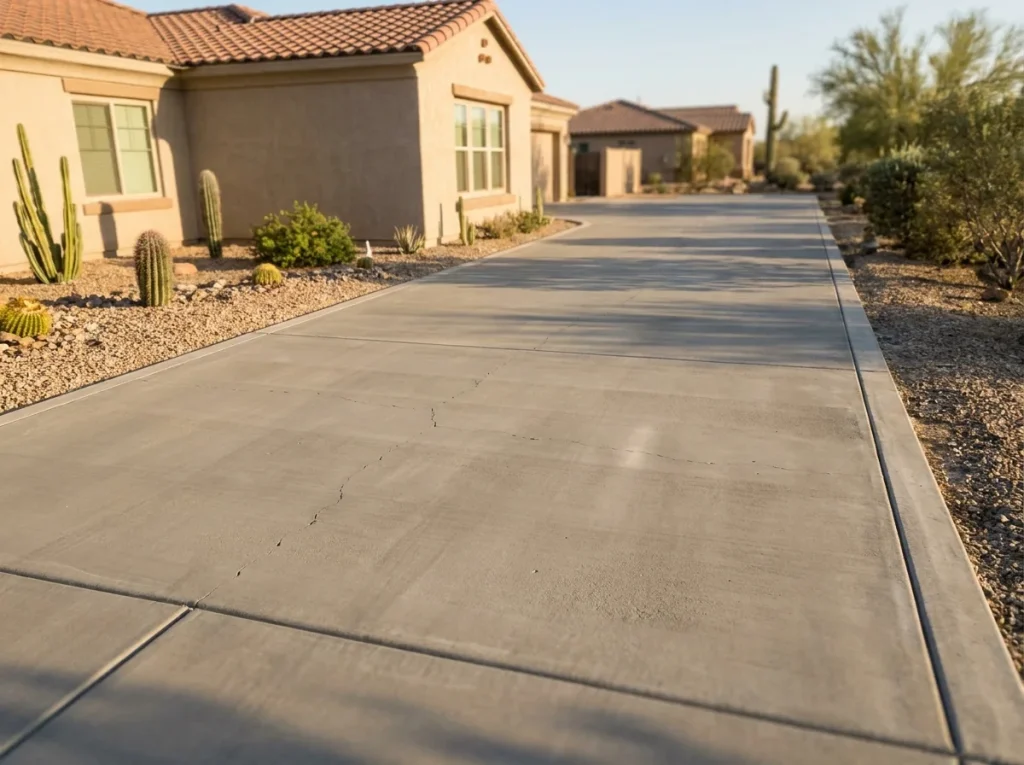
How long does concrete leveling last? In most cases, a properly done job holds for years — polyurethane foam typically lasts 10 to 15+ years, while mudjacking runs closer to 5 to 10 years — but the honest answer depends less on the material and more on what’s happening in the soil underneath your Phoenix, Arizona slab. Concrete leveling jobs are built around that distinction, because a slab leveled over an unresolved soil or water problem can sink again no matter which method was used.
Typical lifespans by method
Not all leveling methods are built the same, and their expected lifespans reflect that. Two techniques dominate the Phoenix market: mudjacking (also called slabjacking or slurry grouting) and polyurethane foam injection.
- Mudjacking: A cement-based slurry mix is pumped under the slab to fill voids and raise it back into place. It’s a proven, heavier material — and that weight is both its strength and its limitation. Mudjacking typically lasts 5 to 10 years before settling issues can resurface, largely because the added weight of the slurry can compress soft or poorly compacted soil over time.
- Polyurethane foam: A lightweight, expanding foam is injected in small ports and cures within minutes, filling voids without adding significant weight to already-stressed soil. Because it doesn’t add meaningful load and resists moisture intrusion, foam leveling generally lasts 10 to 15 years or more when the underlying soil is stable.
Those ranges are typical, not guaranteed — they’re the ceiling a good installation can reach, not a promise every job hits automatically. A slab with a serious drainage problem underneath it won’t get 15 years out of foam any more than it would get 10 out of mudjacking. The material sets the upper bound; the soil decides whether you actually reach it.
Why the soil underneath decides everything
Concrete leveling doesn’t fix soil. It fixes the symptom — a slab that has dropped because the soil beneath it lost volume, compacted unevenly, or washed out. Void fill and soil stabilization address the immediate gap, packing material under the slab so it’s supported again, but the soil conditions that caused the void in the first place are still there unless something changes.
In the Valley, that usually comes down to Phoenix’s expansive clay and caliche soils reacting to moisture swings — monsoon runoff, an irrigation line dripping against a foundation wall, a downspout dumping water at the slab edge. Soil that shrinks and swells with wet-dry cycles, or that keeps losing fines to a slow leak, will keep creating new voids under a slab even after a perfectly good leveling job. That’s the piece a lot of homeowners don’t hear until after they’ve paid for a fix that didn’t hold.
The real lifespan question isn’t “which product did they use” — it’s “did anyone fix why the concrete sank in the first place.” Level the slab without addressing the water or soil behind it, and you’re just buying time.
What makes leveled concrete sink again
When a leveled slab drops a second time, it’s almost never a failure of the foam or mudjacking itself. It’s typically one of these underlying causes:
- Ongoing water intrusion. A leaking sprinkler line, poor grading, or a downspout aimed at the foundation keeps saturating soil right where the slab needs support, gradually washing out fines and reopening voids.
- Soil that was never stabilized. If the leveling job only filled the existing void without stabilizing the surrounding soil, the same expansive-clay cycle that caused the first sink can start a new one.
- New settlement elsewhere on the slab. Concrete leveling addresses the void that exists at the time of the job. A different section of the same slab can settle later if soil conditions shift under a part that wasn’t originally affected.
- Heavy point loads on a marginal fix. Parking a vehicle, storing heavy equipment, or adding a structure over ground that was borderline to begin with can accelerate re-settlement, especially with mudjacking’s added weight already in play.
This is exactly why a foundation inspection that looks past the visible crack or dip matters — identifying the moisture source or soil condition driving the movement is what keeps a leveling job from becoming a repeat expense.
How a good job extends the life
The gap between a leveling job that lasts 5 years and one that lasts 15 usually comes down to what happened before the material ever went under the slab. A few things separate a durable fix from a short-term patch:
- Complete void fill, not a partial fill. Injecting just enough material to raise the slab back to grade, without fully filling the void space around and beneath it, leaves gaps that can shift and re-settle sooner.
- Soil stabilization where it’s needed. On soft or loose soil, stabilizing the material around the void — not just filling the empty space — gives the slab a firmer base to rest on long-term.
- Addressing the drainage source. Redirecting downspouts, fixing an irrigation leak, or regrading around the slab removes the ongoing cause of settlement rather than just treating its effect.
- Choosing the right method for the soil. Foam’s lighter weight makes it a better fit over soil that’s already marginal; mudjacking can be the right, more economical call where soil is firmer and load isn’t a concern.
We build every leveling job around this sequence — diagnose the cause, stabilize the soil, then level — rather than treating the sunken slab as an isolated cosmetic problem. That approach is the difference between a fix that holds and one you’ll be paying for again in a few years. Warranty coverage on a leveling job is tied to that same standard: work performed to spec on a stable, properly diagnosed base. Ongoing water intrusion the homeowner introduces after the fact, or damage from a cause never disclosed at the time of the job, typically falls outside what a warranty covers — which is another reason the diagnostic step up front matters as much as the leveling itself.
Get Your Foundation Looked At
A quick inspection tells you what is really going on beneath the surface — and we will send a written estimate.
→ Request a Written EstimateIf your slab has settled more than once, or you’re weighing whether leveling is even the right call versus a deeper repair, it’s also worth reading how leveling compares to full slab foundation repair and how it fits alongside uneven floor repair for interior slabs.
Frequently Asked Questions
How long does concrete leveling last?
It depends on the method and the soil. Polyurethane foam typically lasts 10 to 15+ years; mudjacking typically lasts 5 to 10 years. Either range assumes the soil condition that caused the original settlement was identified and addressed — not just the visible dip.
Does foam leveling last longer than mudjacking?
Generally, yes. Polyurethane foam is lightweight and doesn’t add significant load to the soil beneath the slab, which is why it tends to hold longer, especially over soil that’s already soft or marginal. Mudjacking’s slurry mix is heavier, and that added weight can shorten its effective lifespan on weaker soil, even though it’s often the more budget-friendly option upfront.
Will my concrete sink again after leveling?
It can, if the underlying cause of the original settlement — usually water intrusion or unstabilized soil — wasn’t addressed alongside the leveling itself. A slab leveled without fixing a leaking irrigation line or poor drainage nearby is a strong candidate to sink again, regardless of which method was used.
Is concrete leveling permanent?
No leveling method is guaranteed permanent, because soil conditions can change over time. It’s more accurate to think of leveling as a durable repair with a realistic lifespan measured in years — often well over a decade with foam on stable, properly diagnosed soil — rather than a one-time, forever fix.
What voids the warranty on leveling?
Warranty terms vary by job, but coverage generally applies when the work was performed to spec on a properly diagnosed, stable base. New water intrusion introduced after the repair, undisclosed soil or structural conditions, or damage from causes outside the original scope of work typically fall outside warranty coverage. Ask for the specific terms in writing before work begins.
Not sure whether your sunken slab needs simple leveling or points to a bigger settlement issue? Book an inspection and get a written estimate that spells out what’s actually happening underneath your slab before any work starts. You can also browse more concrete and foundation guides on the blog.