
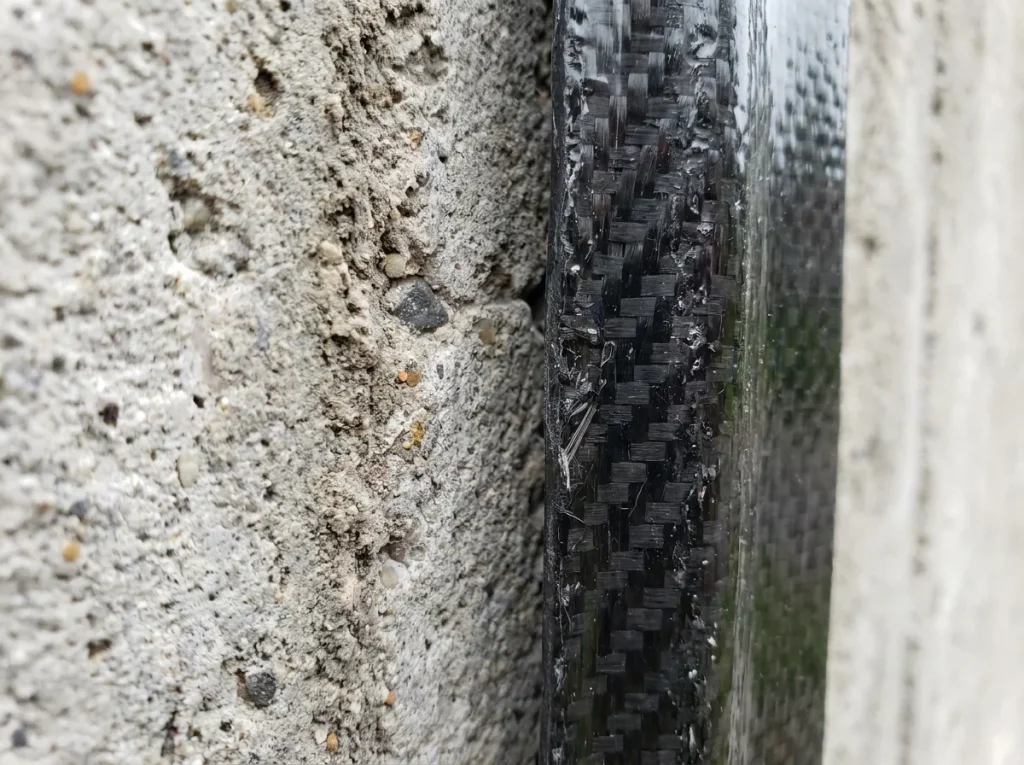
Short answer: yes, carbon fiber foundation repair works — but only for a specific kind of damage, and a lot of the confusion online comes from articles written about basement walls in other states, not the slab-on-grade and stem-wall homes common across Phoenix, Arizona. Here, we handle these repairs with carbon fiber reinforcement, and the honest version of “does it work” depends entirely on which problem you actually have.
The short answer — yes, for the right problem
Carbon fiber reinforcement is a proven, engineering-backed method for stopping a stable crack or a mildly bowing wall from getting worse. It’s not a gimmick, and it’s not snake oil. Carbon fiber straps and staples are used across the concrete-repair industry because carbon fiber has exceptional tensile strength — it resists being pulled apart, which is exactly the kind of stress that widens a foundation crack or pushes a wall inward. Bonded correctly with structural epoxy to a sound concrete substrate, the reinforcement becomes part of the wall’s strength, not just a patch over it.
The catch is the phrase “for the right problem.” Carbon fiber is a stabilization tool, not a lifting tool. If your foundation is still actively moving — sinking, settling, or heaving — straps on the surface won’t fix the cause underneath. That distinction is where most of the internet’s confusion, and most of the bad advice, comes from.
What carbon fiber actually does (and what it doesn’t)
It stops movement and holds a crack or wall in place
Once bonded, a carbon fiber strap or a series of carbon fiber staples (sometimes called stitches) locks the concrete on either side of a crack together, resisting the tension that would otherwise pull it wider. On a bowing stem wall, straps run vertically across the affected section and anchor into sound concrete above and below the bow, holding the wall in its current position and preventing further inward movement. This is a genuinely effective, widely used repair for vertical and diagonal cracks and for minor inward bowing — generally accepted as roughly under two inches of deflection — where the wall itself is structurally intact but under lateral pressure.
It does not lift, re-level, or reverse settlement
Carbon fiber does not push soil back into place, raise a sunken slab, or lift a footing that has settled. It reinforces concrete that’s already in position; it does not move concrete back to where it started. If the actual problem is a sinking footing or ongoing settlement, the fix has to address what’s happening below grade — not the crack on the surface. We cover this distinction in more detail in carbon fiber vs. piers: which repair do you need, and specifically whether straps can help a settled foundation in can carbon fiber lift a settled foundation.
“Carbon fiber is one of the best tools in the toolbox for a stable crack. It’s the wrong tool for a foundation that’s still sinking — and pretending otherwise just delays the real fix.”
How the repair works
The process is straightforward but unforgiving of shortcuts, which is why installation quality matters as much as the material itself:
- Prep the surface. The crack or bowing section is cleaned, and any loose, spalled, or deteriorated concrete is ground back to a sound substrate. Epoxy won’t bond to dust or crumbling concrete — skipping this step is the most common reason a DIY or bargain repair fails.
- Stitch the crack (when applicable). For an active or wider crack, carbon fiber staples are set across the crack line at intervals, effectively stitching the two sides together before the strap or laminate goes on.
- Apply structural epoxy. A high-strength epoxy resin is applied to the prepped concrete. This isn’t hardware-store adhesive — it’s a structural bonding agent engineered to transfer load between the concrete and the carbon fiber.
- Bond the carbon fiber strap or laminate. The strap is set into the epoxy and anchored into sound concrete beyond the damaged area, so the reinforcement is carrying real structural load rather than just sitting on top of a weak spot.
- Cure and finish. The epoxy cures to full strength, locking the system together as a single reinforced unit.
Done right, this is closely related to the work covered on our foundation crack repair page, since carbon fiber is frequently the reinforcement method used once a crack has been diagnosed as stable and structurally repairable.
When carbon fiber is the right call in Phoenix (and when it isn’t)
Most national articles on carbon fiber reinforcement are written with poured-concrete basement walls in mind — a wall type that barely exists on Valley homes. Phoenix construction is overwhelmingly slab-on-grade with block-on-stem-wall foundations, so the role carbon fiber plays here is narrower than what those articles describe. In practice, carbon fiber is the right call for:
- Vertical or diagonal cracks in a stem wall or slab edge that have been confirmed stable, not actively widening
- Minor inward bowing of a stem wall from soil pressure, caught before it becomes severe
- Reinforcing a crack after root causes (like drainage or grading) have been addressed, so the repair isn’t fighting an ongoing problem
It is not the right call when a footing is actively settling, when a section of slab is sinking, or when a wall shows signs of heaving from expansive soil. Those failure modes involve the ground moving under the concrete, and a surface reinforcement can’t correct that. In those cases the real conversation is about foundation settlement repair or, for a slab that’s visibly dropped, sinking foundation repair — different problems that need a different approach entirely, not a stronger strap.
Get Your Foundation Looked At
A quick inspection tells you what is really going on beneath the surface — and we will send a written estimate.
→ Request a Written EstimateHow long does carbon fiber foundation repair last?
When it’s specified for the correct failure mode and installed with proper surface prep and structural epoxy, carbon fiber reinforcement is designed as a permanent, low-maintenance repair — commonly rated for a service life around 50 years. It doesn’t rust like steel, it doesn’t require re-tensioning, and once bonded it becomes part of the wall’s structural system rather than a component that wears out on its own schedule. The lifespan claim only holds, though, when the diagnosis was correct in the first place. Carbon fiber bonded over a crack caused by ongoing settlement won’t fail because the carbon fiber degraded — it will fail because the wrong problem was reinforced.
How we decide — the inspection comes first
We don’t sell carbon fiber as a default answer. An inspection comes first, because the same hairline crack can mean two completely different things: a stable crack that’s been there for years and needs stitching, or the first visible sign of a footing that’s still moving. Confirming which one you have — through crack width monitoring, grading assessment, and a look at the surrounding slab and stem wall — determines whether carbon fiber is the whole fix or the wrong tool. Start with a foundation inspection and you’ll get a straight answer and a written estimate, not a sales pitch for whatever repair happens to be in stock that week.
Frequently Asked Questions
Does carbon fiber foundation repair really work?
Yes, for stable cracks and minor bowing walls. Properly bonded carbon fiber has strong tensile resistance and, installed correctly, stops the crack or wall from moving further. It does not work as a fix for active settlement or a sinking footing — that’s a different repair category entirely.
How long does carbon fiber foundation repair last?
Carbon fiber reinforcement is designed as a permanent repair, typically rated for around 50 years of service life, provided it was applied to the correct failure mode with proper surface prep and structural epoxy bonding.
Is carbon fiber better than steel for foundation repair?
Carbon fiber has a higher strength-to-weight ratio than steel and won’t corrode, which is a meaningful advantage over time, especially in below-grade or moisture-prone conditions. Steel bracing systems have their own use cases for more severe bowing. The better material depends on how much movement and deflection is present — which is a call your inspector makes, not a blanket rule.
Can carbon fiber fix a bowing wall?
It can stabilize a bowing wall when the bowing is minor — generally under about two inches of inward deflection — and the wall is otherwise structurally sound. Beyond that threshold, or when the wall is still actively moving, carbon fiber alone typically isn’t sufficient and a more aggressive structural approach is needed.
Does carbon fiber stop a crack from coming back?
Once epoxy-bonded, carbon fiber staples stitch the crack together and resist the tension that would reopen it, so the same crack line shouldn’t widen again. That guarantee only applies to the crack itself, though — if the underlying cause (soil movement, drainage, settlement) isn’t addressed, a new crack can still form nearby.
Is carbon fiber a permanent foundation repair?
Yes, when it’s used for the problem it’s designed for. It’s engineered as a permanent, structural bond rather than a temporary patch. It becomes a non-permanent-feeling repair only when it’s applied to the wrong problem, such as a footing that’s still settling underneath it.