
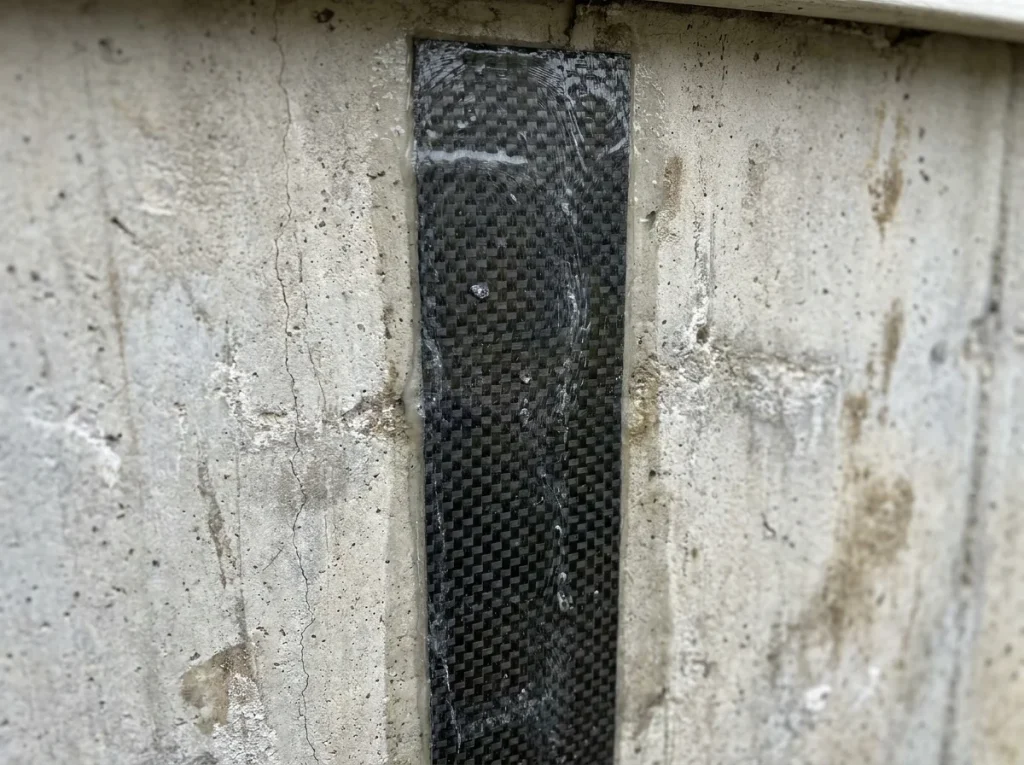
If a contractor tells you carbon fiber will lift your settled slab back to level, get a second opinion before you sign anything. In Phoenix, Arizona, carbon fiber staples and fabric do excellent work holding cracked concrete together and stopping movement from spreading — but lifting a foundation is a completely different physics problem, one that carbon fiber isn’t built to solve. We diagnose which repair your slab actually needs before recommending anything, rather than selling you the product on the truck.
The short answer: no, and here’s the physics
Carbon fiber cannot lift a settled foundation. It’s a tension material — a reinforcing fabric or staple system bonded to the surface of concrete to resist further cracking and hold a wall or slab in its current position. That’s a strength problem, and carbon fiber solves it well. Lifting is a completely different problem: it requires generating enough upward force underneath the structure to physically raise a section of slab or wall back toward level, then supporting that new position permanently. No amount of surface-bonded fabric generates that kind of force. Carbon fiber has no mechanism for pushing a slab upward — it only holds what’s already there in place.
This is also where the settlement-versus-lateral-movement distinction matters. A cracked stem wall or slab that’s cracking but hasn’t dropped in elevation is often a strength/stability issue — a strong candidate for reinforcement. A slab or footing that has actually sunk, tilted, or dropped is a settlement problem, and settlement is corrected by changing elevation, not by bonding fabric to the surface. Mixing the two up is how homeowners end up paying for reinforcement that never addresses why the floor is uneven in the first place.
What lifting actually requires (piers, jacking)
Lifting a settled foundation is a mechanical problem solved with mechanical force underneath the structure. In the foundation repair industry, that generally means one of two approaches:
- Piers (helical or push/resistance piers): steel shafts driven or screwed down to load-bearing soil or bedrock, then used to transfer the structure’s weight off the failing soil and, where the system allows, to lift the affected section.
- Slab jacking or leveling: material is pumped beneath a slab to fill voids and raise it back toward its original elevation, addressing the void or soil loss under the concrete rather than the concrete itself.
Piers are a legitimate industry method for foundations that need vertical lift, and it’s worth understanding how they work so you can evaluate a proposal intelligently. That said, piers and underpinning are not services we perform. Our work focuses on stabilizing, sealing, reinforcing, and leveling concrete — including concrete leveling for slabs that have settled from soil voids beneath them. When a project genuinely needs pier-driven lift of a structural footing, that’s a different scope, and we’ll tell you so plainly rather than stretching a reinforcement product to cover a job it can’t do.
Carbon fiber holds a wall or slab exactly where it is right now. It cannot put a wall or slab back where it used to be.
What carbon fiber is genuinely good at
None of this makes carbon fiber a weak repair — it’s one of the most effective tools available for the right problem. On Phoenix slab-on-grade construction, carbon fiber staples and stitching are commonly used to cross-stitch cracks in slabs and stem walls, arresting the crack and distributing stress across the reinforced area so it doesn’t keep spreading. Carbon fiber rebar and fabric systems add tensile strength to concrete and masonry that’s cracking or bowing under lateral pressure, which is common with retaining sections and stem walls under soil or hydrostatic load.
Used correctly, carbon fiber reinforcement:
- Stops an active crack from widening further
- Adds tensile strength to a wall or slab under lateral stress
- Restores structural continuity across a cracked section without full demolition
- Costs a fraction of piering or wall replacement when the underlying issue is strength, not elevation
We’ve applied carbon fiber reinforcement across the Phoenix area for years. That track record exists because we recommend carbon fiber only when the diagnosis actually calls for it — not as a default answer to every crack. Learn more about the process on our carbon fiber reinforcement page.
Get Your Foundation Looked At
A quick inspection tells you what is really going on beneath the surface — and we will send a written estimate.
→ Request a Written EstimateWhen you need both (stabilize, then lift)
Some foundations genuinely need both a strength fix and an elevation fix, and the sequence matters. If a section of slab or wall has settled and is also actively cracking, lifting first without reinforcing the cracked concrete can make the crack worse as the slab moves. In most cases, the right order is: stabilize and reinforce the compromised concrete so it can safely tolerate movement, then address the settlement itself — whether that’s leveling the slab or bringing in a pier contractor for structural lift where that scope is warranted. Trying to skip straight to lift on concrete that hasn’t been stabilized risks turning a repairable crack into a bigger structural problem.
This is exactly why diagnosis has to come before product selection. A foundation inspection should identify whether you’re looking at a settlement issue, a lateral-pressure issue, or both — and only then does it make sense to talk about which repair method fits. If you’ve been told carbon fiber alone will fix an obviously sunken slab, that’s a signal to get a second, more thorough look before committing.
Frequently Asked Questions
Can carbon fiber lift a foundation?
No. Carbon fiber is a reinforcing material that bonds to the surface of concrete to add tensile strength and stop cracks from spreading. It has no mechanism to generate upward lifting force, so it cannot raise a settled slab or wall back to level.
Does carbon fiber fix a sinking foundation?
Carbon fiber can stabilize the concrete of a sinking foundation — for example, stitching a crack that’s opening as the slab moves — but it does not stop or reverse the sinking itself. A sinking foundation needs its underlying cause (soil loss, poor compaction, drainage) addressed and often needs leveling or lift, not reinforcement alone.
What actually lifts a settled foundation?
Vertical lift comes from mechanical methods applied underneath the structure: piers driven to stable soil or bedrock, or slab jacking/leveling material pumped beneath a settled slab to fill voids and raise it. We perform concrete leveling for slab settlement; structural pier work is outside our scope and belongs with a pier specialist.
Can carbon fiber straighten a wall?
Carbon fiber can stop a bowing wall from bowing further and reinforce it against ongoing lateral pressure, but it does not pull or push a wall back to straight. Straightening a significantly bowed wall typically requires wall anchors, bracing, or replacement, applied before or alongside reinforcement — not carbon fiber on its own.
Do I need piers instead of carbon fiber?
It depends on the diagnosis. If your concrete is cracking or bowing but hasn’t dropped in elevation, carbon fiber reinforcement is likely the right, less invasive fix. If a section has visibly settled or sunk, you need a lift-capable method like piers or slab leveling instead — or first, in addition to reinforcement if the concrete is also compromised. A proper foundation inspection settles which category you’re in before any product gets recommended. If you’re unsure which situation applies to your home, book an inspection and get a written estimate that matches the actual diagnosis, not just the crack you can see.