
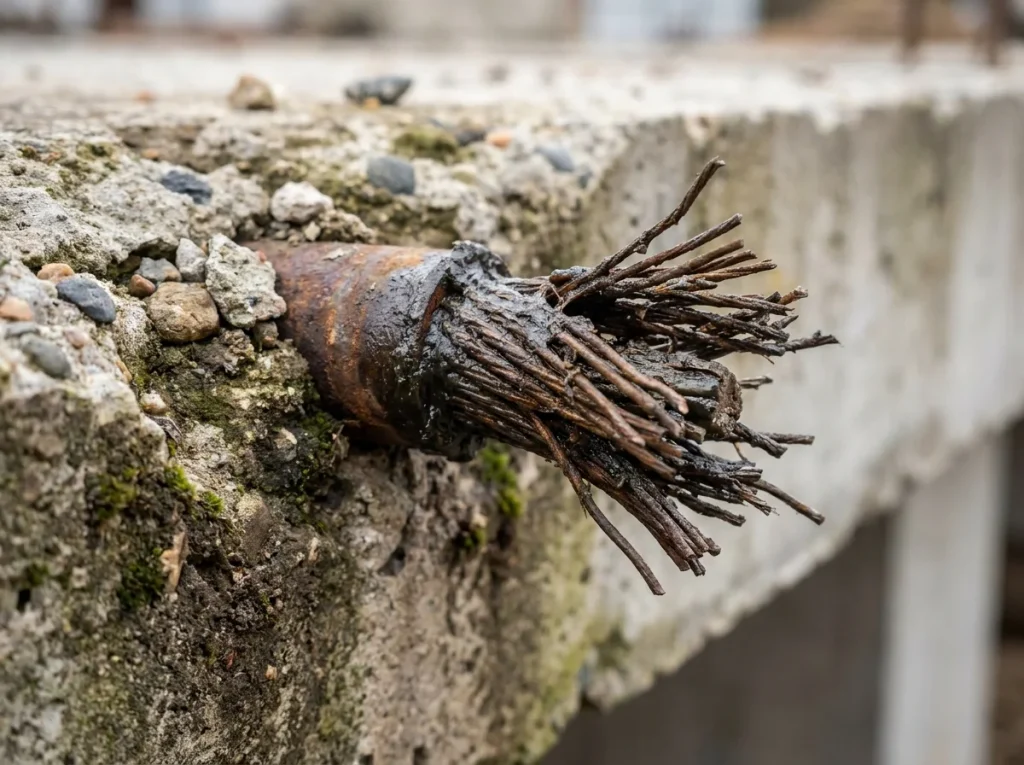
Is it safe to cut a post-tension cable? No — not by accident, and never on purpose. If your Phoenix or greater Arizona home sits on a post-tension slab, the steel tendons threaded through that concrete are holding thousands of pounds of tension, and severing one can send a whip of steel through a wall, a leg, or a face in a fraction of a second. This is the one foundation topic where the danger isn’t just to your slab — it’s to you, and it’s why we treat any exposed or nicked tendon as an emergency, not a DIY project.
What a post-tension cable is doing under your slab
A post-tension slab isn’t just poured concrete with rebar sitting passively inside it. Steel tendons — cables sheathed in a protective coating — run through the slab in a grid pattern, and after the concrete cures, a contractor stretches (tensions) each one with a hydraulic jack and locks it in place at an anchor. That tension compresses the concrete, which is what lets a post-tension slab span farther and resist cracking better than a standard slab-on-grade foundation. It’s a smart engineering solution, and it’s extremely common in newer Phoenix-area construction because it handles our expansive, moisture-shifting desert soils well.
The catch is right there in the name: post-tension. Every one of those cables is permanently storing an enormous amount of mechanical energy, the same way a stretched bowstring stores energy until it’s released. That tension doesn’t go away once the slab is finished — it stays locked in for the life of the building.
Why cutting one is genuinely dangerous
Cut, drill through, or even deeply nick a live post-tension tendon and you release all of that stored energy at once. The cable can snap back violently, recoiling with enough force to cause serious injury — this isn’t theoretical caution, it’s a well-documented hazard in the construction industry, which is exactly why post-tension slabs carry warning language from the day they’re poured.
A tensioned cable doesn’t care whether you meant to hit it. The energy releases the instant the steel gives way, and there’s no safe distance if you’re the one holding the drill.
Beyond the immediate injury risk, a severed tendon also stops doing its job structurally. That section of slab loses the compressive support it was engineered to provide, which can lead to new cracking, sagging, or uneven areas radiating out from the cut point — turning a moment of carelessness into a much larger repair.
When homeowners hit them by accident (anchors, plumbing, remodels)
Almost nobody sets out to cut a post-tension cable. It happens during ordinary home projects that involve putting a hole in the slab:
- Anchoring a patio cover, pergola, or railing post directly into the slab
- Installing an interior wall anchor for shelving, cabinetry, or a safe
- Plumbing repairs or re-routes that require breaking into the slab
- Remodels or additions where a contractor drills for new footings or utility runs
In Arizona, the most common trigger our team hears about is a plumbing repair — a slab leak or re-pipe job where a plumber (or a homeowner directing one) needs to get under the concrete and doesn’t confirm where the tendons run first. It’s a reasonable mistake, but it’s exactly the scenario a professional cable location survey is designed to prevent.
How to tell if you have a post-tension slab
Before anyone drills, cuts, or anchors into your foundation, you need to know what kind of slab you’re dealing with. A few reliable signs:
- The garage warning stamp. Most post-tension slabs are marked with a plate or stamped notice near the garage entry or electrical panel reading something like “POST-TENSIONED SLAB — DO NOT CUT, CORE, OR DRILL WITHOUT LOCATING TENDONS.” If you see it, treat every penetration as high-risk until proven otherwise.
- Your build date and builder. Post-tension construction has been common in Phoenix-area new builds for decades, especially on larger or custom homes. Your original plans or engineering documents, if you have them, will usually specify the foundation type.
- Anchor patterns at the slab edge. Post-tension tendons terminate at anchors along the slab perimeter, sometimes visible as small pockets or plates near the foundation edge.
If none of that gives you a clear answer, don’t guess. A professional foundation inspection can confirm your slab type before any drilling plan moves forward, and if you’re not sure whether your foundation is post-tension or standard slab-on-grade at all, our guide to telling a slab foundation from a post-tension foundation walks through the differences in more depth. For general slab issues that aren’t tendon-related, see our slab foundation repair page.
Once you know you have a post-tension slab, the only safe way to plan a penetration — an anchor, a plumbing access point, a new footing — is to have the tendons physically located first. Professionals use ground-penetrating radar (GPR) or a similar cable-locating method to map exactly where each tendon runs beneath the surface, then mark safe zones before any drilling starts. If you want to understand what that process actually looks like, we cover it in how pros locate post-tension cables before drilling, and if you’re just getting oriented on the foundation type itself, start with what a post-tension slab foundation is.
Get Your Foundation Looked At
A quick inspection tells you what is really going on beneath the surface — and we will send a written estimate.
→ Request a Written EstimateWhat to do if a cable is exposed or damaged
If a plumber, contractor, or DIY project has already exposed, nicked, or fully severed a post-tension tendon, stop work in that area immediately and keep people clear of it. Do not attempt to cut, bend, or remove any more of the cable yourself, and do not try to re-anchor or re-tension it on your own — that work requires specialized hydraulic tensioning equipment and an understanding of the slab’s original design tension.
This is a job for a foundation specialist. Depending on the tendon and the extent of the damage, repair may involve splicing and re-tensioning the existing cable or installing a supplemental repair to restore the slab’s structural integrity. We evaluate damaged post-tension tendons and the surrounding slab condition before recommending a fix — never guesswork. Explore the full scope of that work on our post-tension slab repair page.
Frequently Asked Questions
Is it safe to cut a post-tension cable?
No. A post-tension cable is under continuous, powerful tension, and cutting it — intentionally or by accident — releases that stored energy suddenly. The recoiling cable can cause serious injury, and the slab loses structural support in that area. Never cut a post-tension tendon; always have tendons professionally located before any drilling or cutting near a post-tension slab.
What happens if you cut a post-tension cable?
The severed cable can snap back violently as the tension releases, creating a real injury risk to anyone nearby. Structurally, that tendon stops compressing the slab in its zone, which can lead to new cracking or settling around the cut. The affected tendon typically needs professional repair or re-tensioning to restore the slab’s intended strength.
Can you drill into a post-tension slab?
Yes, but only after the tendons have been located first. Post-tension slabs are routinely drilled for anchors, plumbing, and remodels — the key is confirming exactly where the cables run using a cable-locating method like GPR before any hole is made, so the drilling stays clear of the tendons.
How do you know if you have a post-tension foundation?
Check the garage or utility area for a stamped warning plate reading something like “POST-TENSIONED SLAB — DO NOT CUT.” You can also check your home’s original building plans, or ask your builder or an inspector to confirm the foundation type before doing any slab work.
Can a cut post-tension cable be repaired?
In many cases, yes — a damaged tendon can be spliced, repaired, or re-tensioned by a foundation specialist with the right equipment, and the surrounding slab evaluated for any resulting damage. The right fix depends on the extent of the damage, which is why professional assessment always comes first.
If you suspect a post-tension cable has been exposed, nicked, or damaged in your Phoenix-area home — or you’re planning a project that requires drilling into your slab — don’t leave it to chance. Contact us to book an inspection and get tendon locations and any needed repairs handled safely.