
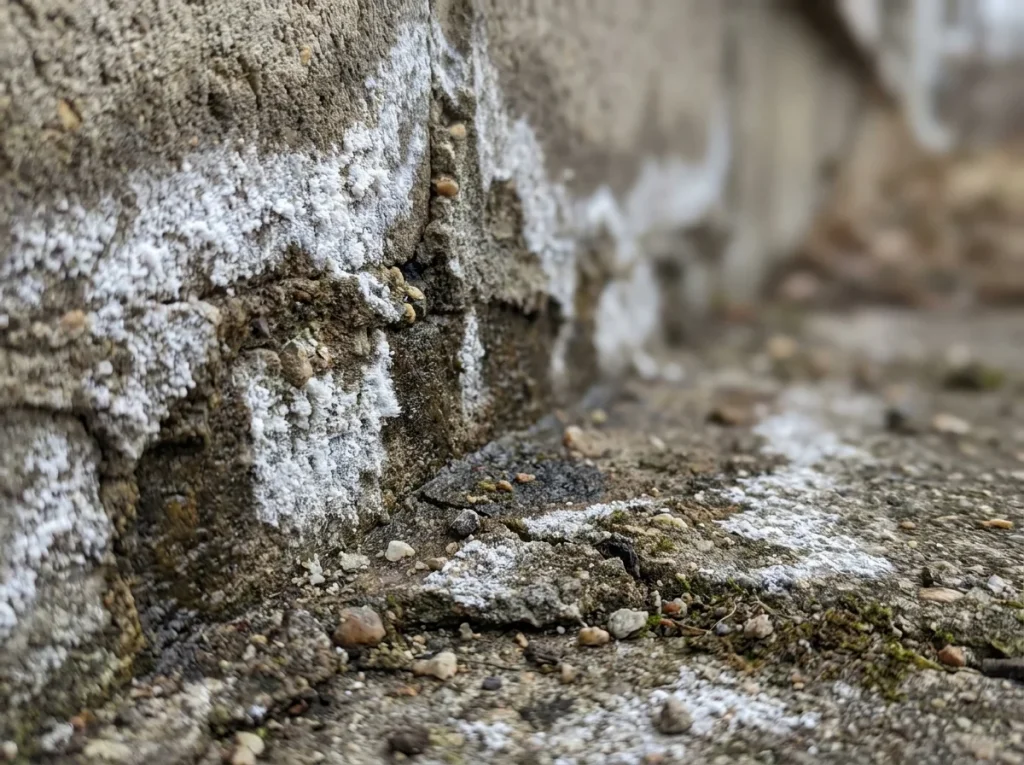
Yes, but only when the repair addresses the water that caused the damage in the first place. Across Phoenix and the greater Valley, stem wall repair starts with removing corroded rebar and spalled concrete — but if irrigation overspray, poor grading, or a downspout is still dumping water at your footing, the same crack or bulge tends to come back within a year or two. A repair that actually stops moisture intrusion has to fix the wall and the water source.
Short answer — the repair helps, but only if the water source is addressed
Concrete repair and moisture control are two different jobs that happen to meet at the same wall. The repair — cutting out contaminated concrete, treating or replacing corroded rebar, patching and waterproofing — stops the deterioration that’s already happened and restores the wall’s strength. It does not, by itself, change the amount of water hitting your foundation. If your stem wall has been staying wet because of overspray from a sprinkler head, a downspout that empties two feet from the house, or grading that slopes toward the foundation instead of away from it, that water source needs to be corrected separately. Skip that step and you’ve paid for a repair that’s on the same clock as the one it replaced.
“We can fix the concrete every time. What actually keeps a stem wall dry is fixing where the water’s coming from — that’s the part homeowners don’t expect to hear, and it’s the part that makes the repair last.”
How moisture damages a stem wall in the first place
A stem wall is the short concrete wall that sits on top of the footing and carries the load down from the framing above. It’s reinforced with steel rebar, and rebar is the weak link once water gets involved. When moisture — from irrigation, rain, or rising groundwater — reaches that steel, it starts to oxidize. Rust doesn’t just weaken the bar; it expands, in some cases to roughly six times the bar’s original volume, and that expansion pushes outward from the inside of the concrete. The result is cracking, bulging, and eventually spalling, where chunks of concrete face pop off and expose the rusted steel underneath. You can read more about the mechanics of that process on our page about what causes stem wall cracks, and about the related failure pattern on our concrete spalling repair page.
Phoenix’s clay-heavy soil compounds the problem. Expansive soil swells when it’s saturated and shrinks as it dries, and that repeated movement stresses a stem wall that’s already being attacked from the inside by corroding rebar. It’s a two-front problem — chemical damage from the water itself, and mechanical stress from the soil around it.
What a complete repair includes
A repair that’s built to last addresses both the existing damage and the conditions that caused it. That means more than a surface patch.
Removing contaminated concrete and rebar
The first step is removing every section of concrete that’s been contaminated by rust or moisture, not just the visibly cracked or spalled area. Corroded rebar is exposed, cleaned or replaced, and treated to stop further oxidation before any new concrete goes back in. Patching over rusted steel without addressing it just buries a problem that keeps expanding underneath the new surface — it’s the most common shortcut we see in prior repairs that failed within a couple of years.
Waterproofing membrane and sealing
Once the structural repair is in, a waterproofing membrane and sealant are applied to the wall to keep new moisture from reaching the concrete and rebar again. This is the layer that specifically answers “do you waterproof a stem wall after repair” — the structural fix and the moisture barrier are part of the same scope, not an upsell tacked on afterward. Without it, the wall is structurally sound again but just as exposed to the water that damaged it the first time.
The drainage fixes that keep it dry (grading, downspouts, irrigation)
The repair and the membrane handle the wall. Keeping water away from the foundation in the first place is a separate — and honestly cheaper — piece of the job, and it’s the one most contractors skip because it’s not concrete work. Three things to check around every stem wall:
- Grading: The soil around the foundation should slope away from the house, not toward it. Flat or reverse-sloped grading lets water pool at the base of the stem wall instead of running off.
- Downspouts: Gutters that discharge right at the foundation are one of the most common causes we see. Extending downspouts several feet away from the wall takes the concentrated flow off the footing entirely.
- Irrigation setback: Sprinkler heads and drip lines aimed at or near the stem wall keep the soil saturated year-round. Pulling irrigation back from the foundation line, or redirecting spray patterns, removes a constant moisture source rather than an occasional one.
Arizona’s monsoon season adds a seasonal spike to all of this — heavy, fast rainfall on ground that’s often bone-dry can overwhelm grading and drainage that worked fine the rest of the year. If you want the seasonal mechanics, we cover it in why monsoon season causes foundation cracks, and the soil side of the equation is explained in why Phoenix soil wrecks foundations.
Get Your Foundation Looked At
A quick inspection tells you what is really going on beneath the surface — and we will send a written estimate.
→ Request a Written EstimateWe repair stem walls and diagnose the drainage behind them across the Phoenix area. That’s why the drainage conversation happens at the same visit as the repair assessment, not as an afterthought.
Frequently Asked Questions
Can stem wall repair stop moisture intrusion?
It can, but only as part of a complete repair. Removing damaged concrete and rebar and applying a waterproofing membrane addresses the wall itself; stopping moisture intrusion for good also requires correcting the water source — grading, downspouts, or irrigation — that let water reach the wall in the first place.
Do you waterproof a stem wall after repair?
Yes. A waterproofing membrane and sealant application is a standard part of a proper stem wall repair, applied after the contaminated concrete and rebar are addressed. It’s the layer that keeps new moisture from reaching the repaired area.
What causes moisture in a stem wall?
The most common causes in the Phoenix area are irrigation overspray hitting the wall directly, grading that slopes toward the foundation instead of away from it, downspouts discharging at the base of the wall, and, seasonally, monsoon rainfall on soil that isn’t draining properly.
Will fixing the stem wall stop efflorescence?
Efflorescence — the white, chalky mineral deposit that appears on concrete — is a symptom of moisture moving through the wall, not a separate problem. Repairing and waterproofing the stem wall addresses the moisture path that causes it, but if the underlying water source isn’t corrected, efflorescence can reappear even on a structurally sound wall.
How do I keep water away from my foundation?
Start with the three things most homeowners overlook: make sure the grade slopes away from the house, extend downspouts well past the foundation line, and pull irrigation heads and drip lines back from the stem wall. Together these address most of the moisture sources that lead to stem wall damage in the first place.
If you’re seeing cracking, bulging, or white mineral deposits on a stem wall, book an inspection — we’ll assess both the wall and the water source and put the findings in a written estimate. Contact us or explore more on the blog.