
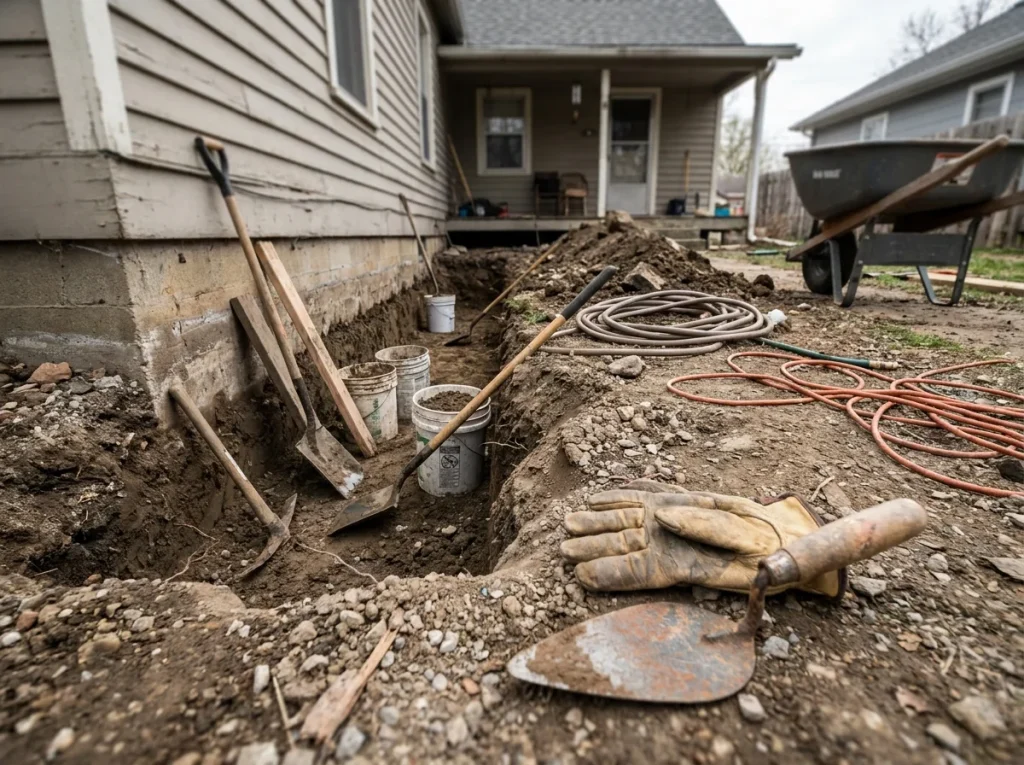
How long does foundation repair take? For most Phoenix homes, the honest answer is somewhere between a few hours and about a week, depending on what’s actually wrong with the slab or stem wall. A single hairline crack injection can be done before lunch, while a stretch of spalled or bowing stem wall might keep a crew on site for several days. We diagnose and repair Arizona foundations, and the timeline always comes down to the same variable: what the repair actually is.
That variable-by-variable answer is more useful than a single number, because “foundation repair” covers a wide range of jobs. A homeowner asking about a cosmetic crack and a homeowner asking about a settling corner of the house are really asking two different questions, even though they used the same search term. Below is a breakdown by repair type, what happens before the crew ever shows up, and what to expect while the work is underway — plus whether you’ll need to pack a bag or can just work around the crew from the next room.
The short answer depends on the repair
Foundation problems in the Phoenix area tend to fall into a handful of categories: cracks, spalling (crumbling or flaking concrete surfaces), stem wall damage, corroded or failed anchor bolts, and settlement that shows up as uneven floors or a sinking corner. Each of these has its own repair method, and each method has its own realistic timeline. A contractor who tells you “two days” before seeing the damage is guessing. A proper timeline only comes after an inspection confirms the cause and the scope of the repair.
Expansive clay soil, seasonal moisture swings, and monsoon runoff all play a role in how Valley foundations move over time, and that’s part of why the repair scope — and the timeline — varies so much from house to house even when the symptoms look similar from the curb.
Timeline by repair type
Crack injection and anchor bolts (hours to a day)
Non-structural cracks are usually the fastest fix. Foundation crack repair using epoxy or polyurethane injection typically wraps up in a single visit — often just a few hours, depending on crack length and access. Anchor bolt replacement, which addresses corroded or missing bolts connecting the framing to the foundation, is similarly a same-day job in most cases since it’s targeted, localized work rather than a full perimeter overhaul.
Stem wall and spalling repair (a few days)
When the damage involves a stem wall — cracking, bowing, or separation at the base of the exterior walls — or widespread spalling repair where the concrete surface is flaking or exposing rebar, the job runs longer. These repairs often involve excavation, surface preparation, patching or rebuilding sections, and in some cases carbon fiber reinforcement to stabilize the wall against further movement. Plan on a few days on site rather than a single afternoon, more if multiple sections of the foundation need attention.
Concrete leveling (1–3 days typical)
Concrete leveling for uneven slabs, walkways, or settled sections is generally a 1–3 day process, depending on how much square footage needs to be raised and stabilized. It’s worth noting that the foundation repair industry as a whole also includes deeper underpinning methods like helical or push piers for severe settlement — those systems carry their own multi-day timelines and are a different category of work entirely. We focus on crack, spalling, stem wall, carbon fiber, anchor bolt, and leveling repairs suited to the settlement and soil patterns we see across the Phoenix area.
The number one thing that throws off a homeowner’s expectations isn’t the repair itself — it’s not accounting for everything that happens before the crew ever picks up a tool.
The phases before work starts (inspection to schedule)
The “how long does foundation repair take” question usually gets asked with only the on-site labor in mind. In reality, a repair moves through four phases, and the first two happen before any concrete work begins:
- Inspection — a technician examines the cracking, spalling, or settlement pattern, checks for active movement, and identifies the likely cause.
- Written estimate — based on the inspection findings, you get a scope of work and a price before anything is scheduled. This is also when the realistic timeline gets set, since it depends on the confirmed repair type.
- Scheduling — repair work gets slotted in, which can take anywhere from a few days to a couple of weeks depending on current job volume and whether materials need to be ordered.
- Repair and cure/finish — the actual on-site work, followed by the time the concrete or injected material needs to cure before it’s at full strength.
Homeowners planning around a repair — especially if it’s tied to a home sale or an inspection report from a real estate transaction — should factor in the full sequence, not just the days a crew is physically on site. Booking the inspection early is the single best way to compress the overall timeline, since it’s the step that determines everything after it.
Get Your Foundation Looked At
A quick inspection tells you what is really going on beneath the surface — and we will send a written estimate.
→ Request a Written EstimateCan you live in the house during repairs?
For the great majority of Phoenix foundation repairs, yes — you can stay in the home while work is underway. Crack injection, anchor bolt replacement, and most stem wall or spalling repairs are exterior or localized interior jobs that don’t require residents to relocate. Expect some noise, equipment staged in the yard or driveway, and limited access to the specific area being worked on, but the rest of the house typically functions normally.
The exceptions are larger-scope jobs — extensive settlement repair affecting multiple rooms, or work that requires equipment access through the interior of the home for an extended period. In those cases, the technician doing your inspection will walk you through what to expect for that specific repair before work is scheduled, so there are no surprises on day one.
Frequently Asked Questions
How long does foundation repair take?
It depends on the repair type: crack injection and anchor bolt replacement often finish in hours to a day, stem wall and spalling repairs typically take a few days, and concrete leveling generally runs 1–3 days. The only way to get an accurate timeline for your house is through an on-site inspection.
Can you live in your house during foundation repair?
In most cases, yes. Crack, anchor bolt, stem wall, and leveling repairs are localized and don’t require you to leave the home. Larger-scope settlement repairs may have more disruption, which your inspector will explain before work begins.
How long before you can’t see the repair?
Injected cracks and patched spalling are typically finished to blend with the surrounding surface once cured, though some texture or color variation can remain visible depending on the material and the age of the surrounding concrete. Painted or coated surfaces may need a matching finish coat after the repair cures.
Does concrete need time to cure after repair?
Yes. Patched and poured concrete needs time to cure before it reaches full strength, and injected materials need time to set before the crack is considered fully sealed. Your technician will give you specific cure-time guidance for the materials used on your repair, including any restrictions on foot traffic or moisture exposure during that window.
What delays a foundation repair?
The most common delays are scheduling backlogs during busy seasons, weather (heavy monsoon rain can push back excavation or curing work), and scope changes discovered once a repair is underway — for example, finding additional spalling behind a wall section that wasn’t visible during the initial inspection. Ordering specialty materials, like carbon fiber straps for a wider stem wall repair, can also add lead time.
If you’re trying to plan around a foundation repair timeline, the fastest way to get real numbers instead of estimates is to book an inspection and get a written estimate that reflects your specific repair. For a broader look at what’s involved in a typical project, see our residential foundation repair page.