
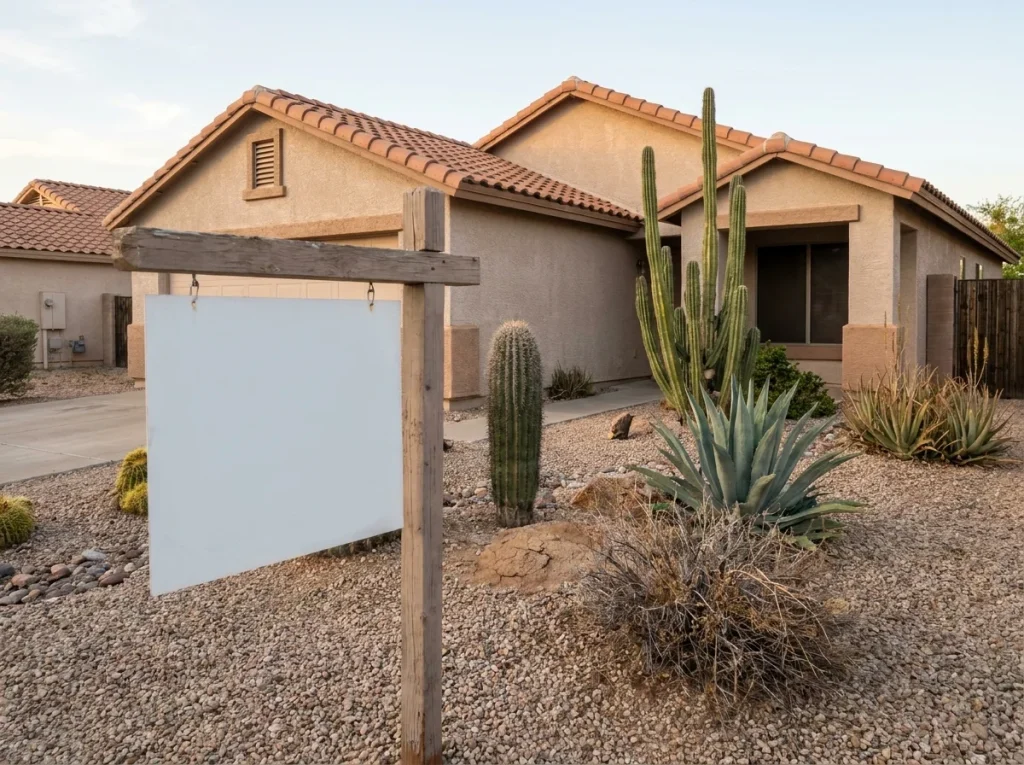
Yes, you can sell a house with foundation problems in Phoenix or anywhere else in Arizona — but you can’t sell it quietly. Arizona law requires you to tell buyers about known foundation issues, and how you handle that disclosure determines whether you walk away with a smooth closing or a renegotiated price at the last minute. Most Valley homes sit on slab-on-grade foundations over expansive desert clay, so cracks, settlement, and uneven floors are common enough that agents and appraisers see them constantly — this isn’t a rare or fatal problem, it’s a manageable one. The guidance below reflects what actually plays out on real Phoenix-area listings.
Yes — but disclosure isn’t optional
Arizona is a disclosure state. If you know your home has foundation issues — a cracked slab, a leaning stem wall, doors that stick, floors that slope — you’re required to put it on the Seller’s Property Disclosure Statement (SPDS). Leaving it off because you’re worried it’ll scare off buyers is the single most expensive mistake a seller can make: it doesn’t kill the sale, it just delays the reckoning until after closing, when a buyer’s inspector finds it anyway and the conversation shifts from “here’s what we found” to “you knew and didn’t tell us.” That’s how sellers end up in a lawsuit instead of a negotiation.
Disclosure isn’t a deal-killer. Buyers in Phoenix and the surrounding valley are used to foundation conversations because the clay soil here moves with every wet winter and dry summer. What actually spooks buyers isn’t a documented issue — it’s an undocumented one. A seller who discloses clearly and backs it up with a written evaluation looks more trustworthy, not less.
Your two paths: repair first or sell as-is
Once the issue is on the table, you have two realistic options, and neither one is automatically “correct.” The right choice depends on your timeline, your budget, and how much of the repair cost you’d rather absorb yourself versus pass along in a lower price.
Repairing before listing (and the transferable warranty edge)
Fixing the foundation before you list gives you the cleanest sale. A repaired home doesn’t need a disclosure caveat about active movement — you disclose that the issue existed and was corrected, which reads very differently to a buyer than an open, unresolved problem. It also widens your buyer pool, since some conventional and FHA lenders hesitate to fund a home with visible structural defects.
The strongest selling point here is a transferable warranty. When we complete a structural repair — crack injection, carbon fiber reinforcement, stem wall correction, or slab leveling — that work carries a warranty that transfers to the new owner. For a buyer comparing your home to others on the block, a documented repair with a warranty attached is a genuine differentiator, not just a checkbox. It says “this was fixed by a professional and it’s covered,” which is worth real money at the negotiating table.
Before committing to a specific fix, it’s worth understanding what foundation repair typically costs in Phoenix and which repair method fits your situation — a hairline crack and an unlevel slab are different jobs with different price tags. Our residential foundation repair page covers the full range of services we perform for homeowners preparing to sell.
Selling as-is at an adjusted price
Repair-first isn’t always the right move. If you’re short on time, don’t want to front the repair cost, or the issue is cosmetic enough that a price adjustment covers it, selling as-is is a legitimate strategy — as long as it’s priced honestly. This usually means getting a written repair estimate before you list, so you and your agent can build the credit or price reduction into the offer instead of guessing.
As-is doesn’t mean disclosure-free. You still have to describe the condition accurately. What changes is who pays for the fix: instead of you paying a contractor, the buyer negotiates a discount (or a closing credit) and handles the repair themselves after closing.
Repair-first widens your buyer pool and lets you sell at full value; selling as-is trades a lower price for speed and less upfront cash out of pocket. Both are valid — the deciding factor is your timeline, not fear of the problem itself.
How foundation issues affect financing and appraisal
Foundation problems can complicate a buyer’s financing, which is where a lot of Phoenix deals stall or fall apart. An appraiser who notes structural concerns may flag the report, and depending on the loan type, the lender can require the issue be fixed — or funds escrowed for repair — before closing. FHA and VA loans in particular tend to be stricter about structural conditions than a conventional loan.
This is where repair-before-listing pays off most directly: a home with an active foundation issue can lose financed buyers entirely, narrowing your pool to cash buyers and investors. A home with a completed, warrantied repair sails through appraisal like any other listing. If you’re weighing whether the investment makes sense for your situation, is foundation repair worth it before you sell walks through that math in more detail.
Get Your Foundation Looked At
A quick inspection tells you what is really going on beneath the surface — and we will send a written estimate.
→ Request a Written EstimateCracks aren’t all treated equally by lenders or appraisers, either — a few hairline cracks read very differently than a wide, active crack or visibly uneven floors. If crack repair or uneven floor repair is the specific issue on your property, addressing that narrower problem can sometimes clear financing concerns without a full structural overhaul.
Why a written evaluation helps either way
Whichever path you choose, the single most useful thing you can do as a seller is get a written evaluation before you list. It replaces guesswork with a documented scope of the problem and, if you go the repair route, a firm cost. That written record does three things at once: it supports an accurate SPDS disclosure, it gives your agent a real number to build pricing around if you go as-is, and it becomes proof for a buyer that the issue was evaluated by a professional rather than papered over.
It’s also the fastest way to find out you’re overthinking it. A lot of what looks alarming to a homeowner — a crack near a corner, a slightly sticking door — turns out to be minor and inexpensive once someone who evaluates foundations for a living actually looks at it. If you haven’t had the home looked at recently, our foundation inspection service is the starting point, and if you’re the one buying rather than selling, do you need a foundation inspection before buying a Phoenix home covers the flip side of this same decision.
Frequently Asked Questions
Can you sell a house with foundation problems?
Yes. It’s routine in Phoenix given how many homes sit on slab-on-grade foundations over expansive clay soil. You simply have to disclose the issue and decide whether to repair before listing or sell as-is at an adjusted price.
Do you have to disclose foundation issues in Arizona?
Yes. Arizona’s Seller’s Property Disclosure Statement (SPDS) requires you to disclose known material defects, and foundation issues qualify. Skipping disclosure doesn’t avoid the problem — it just shifts the risk from a negotiated price now to a potential legal claim after closing.
Is it illegal to sell a house with foundation issues?
Selling isn’t illegal — failing to disclose a known issue is what creates legal exposure. As long as the condition is accurately disclosed on the SPDS, you’re free to sell the home in whatever condition it’s in, repaired or not.
Should I repair the foundation before selling?
It depends on your timeline and budget. Repairing first typically nets a higher sale price, a wider buyer pool, and a transferable warranty you can point to in negotiations. Selling as-is is faster and requires no upfront repair cost, but usually means a lower offer or a closing credit.
Will foundation problems stop a buyer’s loan?
They can. An appraiser who flags structural concerns may trigger a lender requirement to repair the issue, or escrow funds for it, before the loan closes — this is more common with FHA and VA financing. A completed repair with documentation generally clears this hurdle.
Who buys houses with foundation problems?
Cash buyers and real estate investors are the most common buyers for homes with unresolved foundation issues, since they aren’t relying on a lender’s appraisal requirements. Traditional financed buyers remain in play too, but usually expect a price adjustment that reflects the repair cost.
Can a house with foundation problems be fixed?
Almost always, yes. Full foundation replacement is rare. Most Phoenix-area foundation issues are addressed with targeted repairs — crack injection, carbon fiber reinforcement, stem wall correction, or slab leveling — chosen based on what a written evaluation finds. A written estimate is the fastest way to find out what your specific situation needs.