
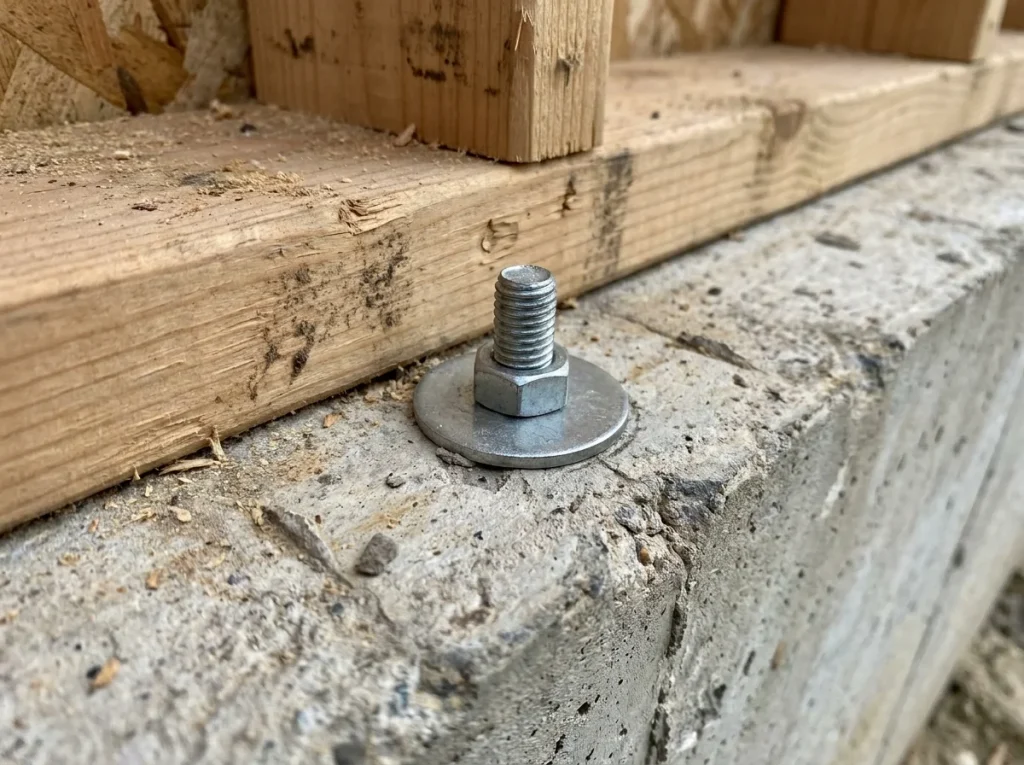
If a home inspector just flagged rusted or missing anchor bolts on your Phoenix, Arizona house, the fear that follows is almost always the same: does fixing this mean tearing into the foundation? In nearly every case, no. A retrofit anchor bolt repair sets new anchors directly into your existing stem wall or footing, with no demolition and no new concrete pour required.
Short answer — yes, almost always
You can replace or add anchor bolts without replacing the foundation. Retrofit anchor hardware exists precisely because contractors need a way to correct missing, corroded, or undersized anchorage in a house that’s already standing on its footing. The stem wall and slab you have today were designed to carry the load; a retrofit simply gives the sill plate a proper, code-compliant connection to that existing concrete. Full foundation replacement is reserved for structural failure — cracked or crumbling footings, severe settlement, or concrete that’s lost its load-bearing integrity — not for a rusted bolt.
How a retrofit anchor works (no teardown required)
A retrofit crew works from the accessible side of the sill plate, whether that’s a crawlspace, an exposed stem wall, or the exterior edge of a slab foundation. A hole is drilled through the mudsill and into the concrete below at the correct depth and angle, then a new anchor is set and secured with a plate washer and nut. The framing stays intact, the slab stays intact, and the homeowner isn’t looking at a demolition schedule — just a focused repair. For homes with visible corrosion at the plate line, this is the same category of fix covered on our anchor bolt replacement page.
Epoxy-set rod vs. retrofit mudsill anchor
Two methods cover most Phoenix retrofits:
- Epoxy-set threaded rod — a hole is drilled into sound concrete, filled with structural epoxy, and a threaded rod is set to cure in place. This method gives excellent pull-out and shear strength and is the go-to where the anchor needs to resist real lateral load, such as at wall ends and shear-transfer points.
- Mechanical expansion anchor — a wedge-style anchor that’s drilled and torqued into place, gripping the concrete mechanically rather than chemically. It’s faster to install and doesn’t require cure time, which makes it a practical option when the epoxy method isn’t necessary or accessibility is tight.
- Retrofit mudsill anchor hardware — purpose-built plates and straps designed to connect the sill plate to the foundation at points where a standard through-bolt isn’t practical, such as near a plate splice or an obstruction.
Which method fits depends on the condition of the concrete, the load path at that section of wall, and how the sill plate is framed — decisions best made during an on-site foundation inspection rather than guessed from a phone call.
When the concrete has to be repaired first
The one honest caveat: a retrofit anchor is only as strong as the concrete it’s set into. Before drilling, a few feasibility factors get checked:
- Edge distance — an anchor set too close to the edge of the stem wall can blow out the concrete under load instead of holding.
- Sound concrete — the material around the drill point needs to be solid, not crumbling, for the epoxy or expansion anchor to develop full strength.
- Hidden spalling — corrosion at an old anchor sometimes has already spalled or cracked the surrounding concrete, even if it isn’t obvious from the surface.
If any of those show up, the sequence changes: the deteriorated section gets repaired first — often through stem wall repair or foundation crack repair — and the new anchor is set into that restored, sound concrete afterward. Skipping that step and drilling into compromised concrete anyway is how a retrofit fails to hold; it’s also why some rushed anchor jobs need to be redone within a few years.
“The bolt is rarely the real problem — it’s whatever let it corrode in the first place. We check the concrete around it before we ever pick up a drill, because an anchor is only as good as what it’s anchored into.”
How many anchors your home should have (code spacing)
The International Residential Code sets a baseline for anchor bolt spacing: anchors generally need to land no more than 6 feet on center along the sill plate, with an anchor required within 12 inches of the end of each plate section. A lot of older Phoenix homes were framed under earlier code cycles or have simply lost anchors to corrosion over the decades, which means a retrofit sometimes isn’t just about replacing what’s rusted — it’s about bringing the wall up to the spacing a modern inspection expects. That’s a common finding during a home inspection on resale homes built before current anchor requirements were standard.
What a retrofit typically costs in Phoenix
Anchor bolt retrofits in the Phoenix area generally run $800 to $3,500. Where a project lands in that range depends on:
Get Your Foundation Looked At
A quick inspection tells you what is really going on beneath the surface — and we will send a written estimate.
→ Request a Written Estimate- How many anchors need to be added or replaced along the perimeter
- Accessibility — a crawlspace or finished interior wall takes more labor than an exposed slab edge
- Whether any stem wall or crack repair has to happen before the anchors go in
Because that concrete-condition question can swing the scope significantly, we don’t quote an anchor retrofit sight unseen. A short on-site look tells us exactly what the wall needs, and you get a written estimate before any work starts.
Frequently Asked Questions
Can you replace an anchor bolt without replacing the foundation?
Yes. Retrofit anchors are installed directly into the existing stem wall or footing using epoxy-set rods or mechanical anchors, with no need to demolish or replace the foundation itself.
Can you add anchor bolts to an existing foundation?
Yes. It’s common for older homes to be under-anchored relative to current code spacing. New anchors can be drilled and set at the correct intervals along the existing sill plate without disturbing the foundation.
How do you retrofit an anchor bolt?
A hole is drilled through the sill plate into the concrete below, then a threaded rod is set with structural epoxy — or a mechanical expansion anchor is torqued into place — and secured with a plate washer and nut. The concrete around the drill point is checked first to make sure it’s sound enough to hold the anchor.
Do I need a new foundation if the anchor bolts are rusted?
Almost never just for a rusted bolt. A new anchor is typically all that’s required. A full foundation issue only comes into play if the corrosion has led to spalled or cracked concrete around the bolt, in which case that section gets repaired before the new anchor is installed.
How much does an anchor bolt retrofit cost?
Most Phoenix-area anchor bolt retrofits fall between $800 and $3,500, depending on how many anchors are needed, accessibility, and whether any concrete repair is required first.
Ask whether a retrofit is right for you — request a written estimate
If a rusted, missing, or under-spaced anchor bolt showed up on an inspection report, don’t let anyone talk you into a bigger scope than the problem actually calls for. We evaluate the concrete first, tell you plainly if a retrofit alone will hold, and put the scope in writing before anything gets drilled. Learn more on our anchor bolt replacement page, or contact us to request a written estimate for your home.