
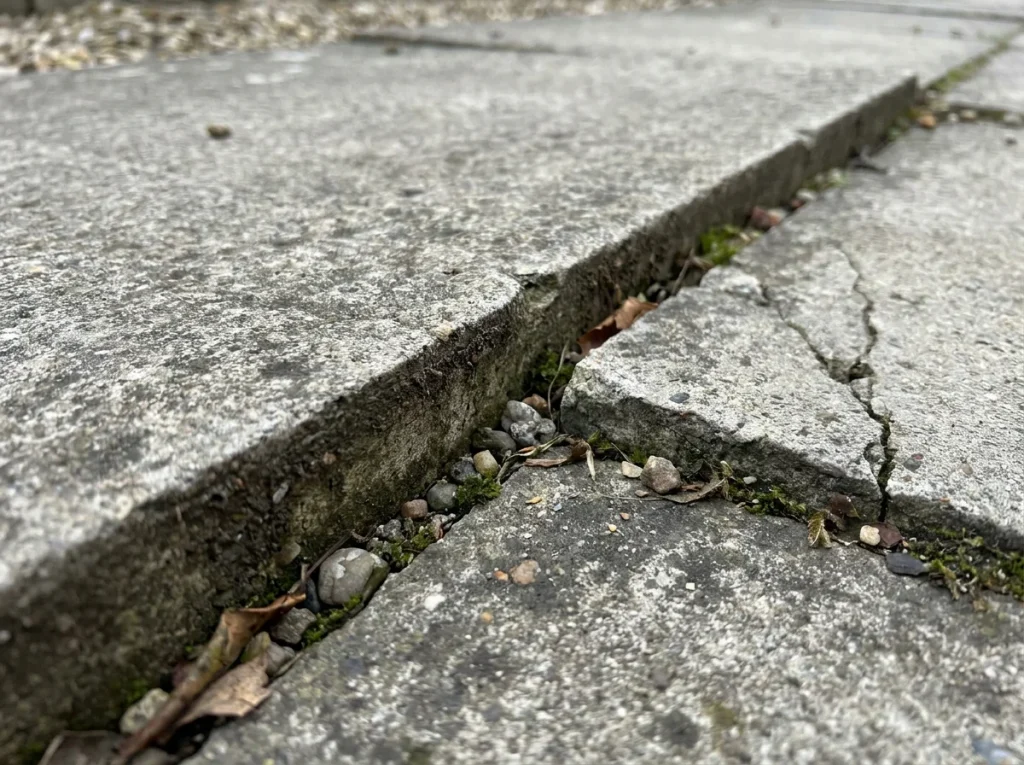
In most cases, yes — a sunken concrete slab in the Phoenix area can be leveled without replacing it, as long as the slab itself is still structurally sound. Arizona’s expansive clay soils and monsoon-cycle moisture swings routinely wash out or compress the soil under driveways, patios, garage floors, and walkways, leaving a perfectly good slab resting on a void instead of solid ground. Phoenix Foundation Repair Co. handles slab leveling and repair work across the Valley, and the honest answer always starts with the same question: is the concrete itself still good, or is the damage past the point leveling can fix?
Yes — if the slab itself is still sound
A slab that has sunk, tilted, or developed a “trip lip” at a joint usually isn’t broken — it’s unsupported. The concrete cured correctly, the reinforcement is intact, and the surface is still flat and crack-free (or close to it). What changed is what’s underneath it: soil that eroded from a leaking irrigation line, compacted after a slow water leak, or simply shrank and swelled through a few Phoenix summer-to-monsoon cycles. When the concrete is sound and the problem is a void or soft spot below it, lifting the slab back to grade solves the problem without breaking anything out.
That distinction matters, because it’s also what separates a straightforward concrete leveling job from a full slab foundation repair. Leveling restores the slab’s position. It does not repair a slab that’s already failed structurally — that’s a different conversation, and we’ll have it honestly if that’s what your inspection turns up.
How slab leveling works (foam and mud)
There are two established methods for lifting an existing slab without removing it, and both work by filling the void underneath rather than tearing out the concrete on top:
- Mudjacking (slurry injection): a cement-based slurry mix is pumped through small drilled holes to fill the void and raise the slab. It’s the older of the two methods and still used where a heavier, denser fill is appropriate.
- Polyurethane foam injection: a two-part expanding foam is injected through holes roughly the size of a dime. It expands within minutes, fills voids, compacts loose soil around it, and lifts the slab with far less added weight than slurry.
Either method stabilizes the soil as part of the process — the goal isn’t just to raise the slab today, it’s to give it something solid to sit on so it doesn’t sink again next monsoon season. The two approaches trade off differently on cure time, weight, and precision, which we break down in more detail in mudjacking vs. polyurethane foam.
When leveling won’t cut it (and we’ll say so)
Leveling lifts a slab. It doesn’t rebuild one. If the concrete itself is cracked through, crumbling, spalling at the surface, or missing chunks around the edges, injecting foam or slurry underneath it won’t hold — you’d be shoring up damaged material instead of fixing the actual problem. The same is true if the “sunken slab” symptom is really coming from a foundation wall issue rather than soil loss under a flatwork slab; leveling a driveway won’t touch a settling stem wall.
It also matters what kind of slab you actually have. A slab-on-grade patio is a different animal than a post-tension foundation slab with steel cables running through it — drilling into the wrong spot on a post-tension slab is a real risk, which is exactly why identifying what you’re working with comes first. If you’re not sure, our guide to telling a slab foundation from a post-tension foundation walks through the tells.
“If the slab’s cracked through, crumbling, or sitting on top of a failed foundation wall, foam isn’t going to fix that — and we’ll tell you before we ever drill a hole.”
When leveling genuinely isn’t the right call, the fix is a proper repair or replacement — not a foam job that buys you a year before the same crack reopens.
Cost and downtime vs. tear-out
Leveling an existing slab is almost always the lighter lift, literally and financially. There’s no demolition, no hauling off broken concrete, no forming and pouring new slab, and no multi-day cure time before you can park a car or walk across the surface again. Most leveling jobs are measured in hours, not days, and the surface is often usable the same day or shortly after.
Get Your Foundation Looked At
A quick inspection tells you what is really going on beneath the surface — and we will send a written estimate.
→ Request a Written EstimateReplacement carries the cost of demolition, disposal, forming, rebar or mesh, the concrete pour itself, and the cure window before the area is back in service. Leveling skips nearly all of that, which is why it’s worth ruling out before committing to a full tear-out — we cover the tradeoffs in more depth in is concrete leveling worth it vs. replacement. The only way to know which one your slab actually needs is a hands-on look, not a guess from a photo.
Interior floors vs. driveways and patios
Interior slabs — garage floors, workshop floors, interior flatwork — are usually leveled with polyurethane foam rather than mudjacking. The injection holes are smaller, there’s minimal mess or vibration, and the lighter fill won’t overload the soil underneath a floor that’s also carrying a structure above it. It’s also the more practical choice when the area needs to be back in use quickly.
Exterior slabs like driveways, patios, sidewalks, and pool decks generally have more tolerance for either method, since they’re not confined by walls and don’t need to dry as fast to be walkable. The right choice still comes down to the size of the void, how much lift is needed, and what’s sitting on top of the slab. That’s a job-by-job call, which is why leveling and repair work should start with an inspection rather than a one-size-fits-all method.
Frequently Asked Questions
Can a concrete slab be leveled without replacing it?
Yes, in most cases — if the slab itself is still structurally sound and the problem is soil loss or a void underneath it, leveling restores the slab’s position without breaking out or replacing the concrete.
How do you level a slab without tearing it out?
Small holes are drilled through the slab, and either a cement-based slurry or expanding polyurethane foam is injected underneath to fill the void, stabilize the soil, and lift the slab back to grade. The holes are then patched.
When do you have to replace a slab instead of leveling?
Replacement is the honest call when the concrete itself has failed — cracked all the way through, crumbling, badly spalled, or sitting on top of a foundation issue rather than a simple soil void. Leveling can’t repair concrete that’s already broken.
Is leveling cheaper than replacing a slab?
Generally yes. Leveling skips demolition, disposal, forming, and the multi-day cure time a new pour requires, which is why it typically costs less and takes far less time than tearing out and replacing the slab.
Can interior floor slabs be leveled?
Yes. Interior floors, including garage floors, are commonly leveled with polyurethane foam because it’s lower-mess, lower-vibration, and lighter than slurry — a practical fit for a floor that needs to go back into use quickly. Book an inspection through contact and we’ll tell you straight whether your slab is a leveling job or something more.